Top Pickleball Paddles Review: Best Options for Control, Power, Spin, and Overall Performance for Every Player
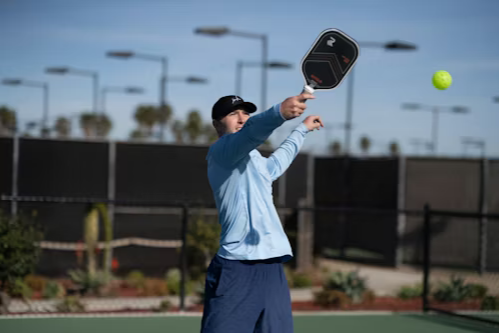
Top Pickleball Paddles Review – A Personal Journey Through the Game
I still remember the first time I picked up a pickleball paddle. It wasn’t anything fancy—just a borrowed paddle with a worn grip and a slightly chipped edge. At the time, I didn’t think much about equipment. I thought pickleball was just about reflexes, quick feet, and having fun. But as I played more, I started noticing something subtle yet powerful: the paddle in my hand changed everything—my control, my confidence, even the way I experienced the game.
That realization sent me down a path I didn’t expect. I began trying different paddles, talking to other players, reading reviews, and testing what worked for me. What started as curiosity turned into a bit of an obsession. And now, I want to share that journey with you—through some of the top pickleball paddles that truly stood out, not just in specs, but in how they feel on the court.
The First Upgrade: Discovering Control
After weeks of playing with that old paddle, I decided it was time to upgrade. I didn’t want anything too advanced—just something that would give me a bit more control.
That’s when I tried the Selkirk Amped S2.
The first thing I noticed was the quiet confidence it gave me. The larger sweet spot meant I didn’t have to be perfect with every shot. Even when I was slightly off-center, the ball still went where I wanted. It felt forgiving, like a paddle that understood I was still learning.
What really stood out was the control. Soft shots near the net—dinks, drops—suddenly felt more intentional. I wasn’t just reacting anymore; I was placing the ball. And for a beginner or intermediate player, that shift is huge.
But it wasn’t perfect. The paddle felt slightly heavier than what I was used to, and during longer matches, my arm would start to feel it. Still, it was a trade-off I was willing to accept at the time.
Power Changes the Game
As my confidence grew, so did my curiosity. I started wondering what it would feel like to have more power behind my shots. I wanted to drive the ball harder, finish points faster.
That’s when I picked up the Onix Z5 Graphite Paddle.
This paddle was different right away. The graphite face gave it a crisp, responsive feel. When the ball made contact, there was a satisfying pop—something I hadn’t experienced before.
Power came easily with the Z5. My serves were stronger, my drives more aggressive. It felt like I had unlocked a new layer of the game. But with that power came a challenge: control became harder to manage.
There were moments when I’d hit the ball just a little too hard, sending it flying beyond the baseline. It taught me an important lesson—more power isn’t always better. It has to be balanced.
Still, for players who love an aggressive style, this paddle is a strong contender. It rewards confidence and assertiveness.
Finding the Balance
At this point, I had experienced both ends of the spectrum—control and power. What I really wanted now was balance. Something that could do both, depending on the situation.
That search led me to the Paddletek Tempest Wave Pro.
From the first game, it felt… right. Not too heavy, not too light. Not overly powerful, but not lacking either. It was one of those rare paddles that didn’t demand adjustment—it adapted to me.
The touch was excellent. I could soften my shots when needed, but still generate enough power for passing shots and overheads. It gave me confidence in every part of the court.
One thing I particularly appreciated was consistency. With some paddles, performance can feel unpredictable. But the Tempest Wave Pro delivered the same reliable response, shot after shot.
If I had to describe it in one word, it would be “trustworthy.”
The Premium Experience
Of course, as I got deeper into pickleball, I became curious about high-end paddles. Were they really worth the price? Or was it just marketing?
That question brought me to the JOOLA Ben Johns Hyperion CFS 16.
This paddle felt like stepping into a different world. Everything about it—from the textured carbon surface to the elongated shape—was designed with precision.
The spin was the first thing that caught my attention. I could shape my shots in ways I hadn’t before. Topspin drives dipped sharply into the court, and slices stayed low and tricky.
It also offered a unique combination of power and control. Unlike the Z5, which leaned heavily toward power, the Hyperion gave me both—but in a more refined way.
However, it wasn’t the easiest paddle to get used to. It required proper technique to truly shine. For beginners, it might feel a bit demanding. But for experienced players, it can be a game-changer.
Lightweight and Effortless
There came a time when my arm started feeling fatigued after long sessions. That’s when I realized how important paddle weight really is.
I decided to try something lighter—the Gamma Compass Pickleball Paddle.
This paddle surprised me. It didn’t look flashy, and it didn’t promise extreme performance. But on the court, it delivered a smooth, effortless experience.
The lightweight design made it easy to maneuver, especially during fast exchanges at the net. My reaction time improved simply because I wasn’t fighting the weight of the paddle.
It also had a soft touch, which made dinking feel natural and controlled.
Of course, the trade-off was power. It wasn’t built for aggressive players who rely on strong drives. But for those who value finesse and comfort, it’s a fantastic option.
What I Learned Along the Way
Looking back, trying all these paddles taught me something important: there is no “perfect” paddle.
What works for one player might not work for another. It depends on your style, your experience, and even your physical comfort.
Here are a few lessons I picked up along the way:
- Control vs. Power is a real trade-off
You rarely get both at maximum levels. Finding your balance is key. - Weight matters more than you think
A paddle that feels fine for 10 minutes might feel exhausting after an hour. - Grip comfort is crucial
If the grip doesn’t feel right, everything else suffers. - Skill level should guide your choice
Advanced paddles can be rewarding, but they often require better technique. - Try before you commit
Whenever possible, test a paddle before buying. What feels good in your hand is more important than specs on paper.
Choosing Your Paddle
If you’re just starting out, I’d suggest going for something forgiving—like the Selkirk Amped S2 or Gamma Compass. They help you build confidence without punishing mistakes.
If you’re an intermediate player looking to improve, the Paddletek Tempest Wave Pro offers a great balance that can elevate your game.
And if you’re experienced and want to push your limits, something like the JOOLA Hyperion might be worth exploring.
But beyond all that, remember this: the best paddle is the one that makes you want to play more.
Final Thoughts
Pickleball, at its heart, isn’t about equipment. It’s about connection—the sound of the ball hitting the paddle, the rhythm of rallies, the laughter between points.
But the right paddle can enhance that experience. It can turn frustration into confidence, hesitation into precision.
For me, each paddle I tried wasn’t just a piece of equipment—it was part of my journey. Each one taught me something new about the game, and about myself as a player.
So if you’re searching for your perfect paddle, don’t rush it. Take your time. Experiment. Enjoy the process.
Because sometimes, the journey to finding the right paddle is just as rewarding as the game itself.
Related Post

How to Choose the Right Racket for Doubles: My Personal Journey of Speed, Control, and Finding the Perfect Match
How to Choose the Right Racket for Doubles — A Personal Journey into Finding the [...]
Head-Heavy vs Head-Light Rackets: My Personal Journey of Discovering the Balance Between Power, Speed, and Control
Head-Heavy vs Head-Light Rackets: Finding My Game, One Swing at a Time I still remember [...]