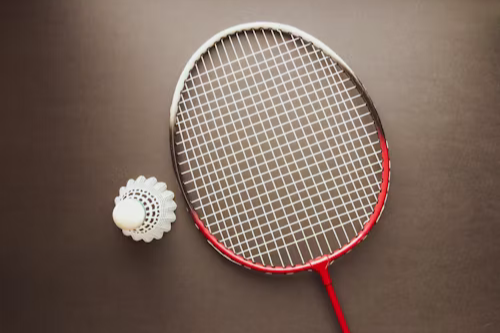
How to Choose the Right Racket for Doubles: My Personal Journey of Speed, Control, and Finding the Perfect Match

How to Choose the Right Racket for Doubles — A Personal Journey into Finding the Perfect Match
I still remember the first time I stepped onto the court to play doubles. It wasn’t anything serious—just a weekend game with friends—but something about the fast exchanges, the quick reflexes at the net, and the constant communication hooked me instantly. Unlike singles, where you carry the weight of every shot alone, doubles felt like a shared rhythm, almost like a conversation spoken through rackets and shuttlecocks.
Back then, I didn’t think much about equipment. A racket was just… a racket. If it looked cool and didn’t break, it was good enough. But as I kept playing, I started noticing something strange: some games felt effortless, while others felt like I was always half a second too late. My reactions were slow, my smashes lacked bite, and my control at the net just wasn’t there.
That’s when I began to realize—choosing the right racket for doubles isn’t just important, it can completely transform your game.
Understanding the Nature of Doubles Play
Before even thinking about rackets, I had to understand what makes doubles different.
Doubles is fast. Really fast.
The shuttle travels quicker, rallies are shorter, and there’s barely any time to think. You’re constantly switching between offense and defense, often in a split second. Most of the action happens at the front and mid-court, especially in competitive play. Drives, pushes, blocks, and quick interceptions dominate the game.
Unlike singles, where power and endurance often take priority, doubles demands speed, control, and quick handling.
Once I understood this, it became obvious that not every racket is suitable for doubles.
My First Mistake: Choosing Power Over Control
Like many beginners, I was drawn to head-heavy rackets. They promised powerful smashes, and who doesn’t want that satisfying “boom” when the shuttle hits the floor?
I picked one that felt solid and strong. And yes, my smashes improved—but everything else suffered.
At the net, I was slow. During fast exchanges, I couldn’t react quickly enough. My defense felt clumsy, especially when facing rapid smashes from opponents. It was like trying to fence with a heavy sword while everyone else used lightweight rapiers.
That experience taught me something important: in doubles, speed often matters more than raw power.
Balance Point: The Heart of Your Decision
If there’s one thing that changed how I choose rackets forever, it’s understanding the balance point.
There are generally three types:
- Head-heavy rackets
- Even-balanced rackets
- Head-light rackets
For doubles, head-light and even-balanced rackets are usually the better choice.
Head-Light Rackets
The first time I tried a head-light racket, it felt… strange. Almost too light. But once I got into a rally, everything clicked.
My reactions were faster. I could defend smashes more easily. Net play became sharper, and I could intercept shots with much better timing.
It felt like my racket was finally keeping up with me.
Head-light rackets are ideal for:
- Defensive players
- Front-court specialists
- Fast-paced rallies
Even-Balanced Rackets
Eventually, I found myself gravitating toward even-balanced rackets. They offered a nice middle ground—enough power for smashes, but still quick enough for defense and net play.
If you’re still figuring out your playstyle, this is probably the safest choice.
Weight Matters More Than You Think
Another thing I used to ignore was racket weight.
I thought heavier meant better—more power, more stability. But in doubles, that’s not always true.
Rackets are usually categorized by weight (for example: 3U, 4U, 5U, etc.). The higher the number, the lighter the racket.
For doubles, lighter rackets (like 4U or 5U) are often preferred because:
- They allow quicker swings
- They reduce fatigue during long rallies
- They improve reaction time
When I switched to a lighter racket, I immediately noticed the difference. My arm felt less tired, and I could play longer without losing speed or precision.
Shaft Flexibility: Finding Your Rhythm
At first, I didn’t even know what shaft flexibility meant. But over time, I realized how much it affects your shots.
There are three main types:
- Flexible shafts
- Medium shafts
- Stiff shafts
Flexible Shafts
These are more forgiving and help generate power even if your technique isn’t perfect. They’re great for beginners or players with slower swing speeds.
Stiff Shafts
Stiff rackets offer more control and precision, but they require better technique and faster swings.
For doubles, many players prefer medium to stiff shafts, especially if they play at a higher level. Personally, I found that a medium shaft gave me the best balance between power and control.
Grip Size: The Small Detail That Changes Everything
This might seem minor, but grip size can seriously affect your performance.
A grip that’s too large can limit your wrist movement, making it harder to react quickly. Too small, and you might struggle with control.
In doubles, where quick wrist action is crucial, I found that a slightly smaller grip (with an overgrip if needed) gave me better flexibility and control.
It allowed me to:
- React faster at the net
- Change directions more easily
- Feel more connected to the racket
Playing Style: Know Your Role on the Court
One of the most important lessons I learned is that your racket should match your role in doubles.
Not everyone plays the same way.
The Front-Court Player
If you love dominating the net—intercepting shots, setting up plays, and applying pressure—you’ll benefit from:
- Head-light racket
- Lightweight frame
- High maneuverability
The Rear-Court Player
If you’re the one smashing from the back and controlling the pace, you might prefer:
- Even-balanced or slightly head-heavy racket
- Medium weight
- Good power generation
The All-Rounder
If you switch roles often (like I do), an even-balanced racket is your best friend.
The Moment Everything Changed
I remember the exact game when I realized I had finally found the right racket.
It wasn’t a tournament or anything big—just a regular evening match. But everything felt… effortless.
My defense was sharp. My net shots were precise. I could switch from defense to attack without hesitation. For the first time, I wasn’t thinking about my racket at all—I was just playing.
And that’s when it hit me: the right racket doesn’t just improve your game—it disappears in your hands. It becomes an extension of you.
Common Mistakes to Avoid
Looking back, I made plenty of mistakes. If I could talk to my younger self, here’s what I’d say:
- Don’t choose a racket just because your favorite player uses it
- Don’t focus only on power
- Don’t ignore weight and balance
- Don’t assume expensive means better
- Don’t skip trying different rackets if you can
Choosing a racket is personal. What works for someone else might not work for you.
Testing Before Choosing
If you have the chance, always try before you buy.
Borrow from friends. Test different models. Pay attention to how the racket feels during:
- Fast rallies
- Defensive situations
- Net play
Sometimes, the “perfect” racket on paper just doesn’t feel right in your hand.
And that’s okay.
Final Thoughts
Choosing the right racket for doubles isn’t about finding the “best” one—it’s about finding the one that fits you.
Your speed, your style, your strengths.
For me, the journey took time. It involved trial and error, frustration, and a lot of learning. But in the end, it made me a better player—not just because of the racket, but because I started paying attention to how I play.
If you’re just starting out, don’t overthink it. Pick something balanced, lightweight, and comfortable. As you grow, your preferences will become clearer.
And one day, you’ll step onto the court, swing your racket, and realize…
Everything just feels right.
That’s when you know you’ve found your match.
Related Post
How to Choose a Racket for Injury Prevention: My Personal Journey from Pain to Playing Smarter and Safer
How to Choose a Racket for Injury Prevention – A Personal Journey Through Pain, Lessons, [...]
How to Choose the Right Badminton Racket: A Practical Guide to Finding the Perfect Balance of Power, Control, and Comfort
Choosing the right badminton racket is something I never thought much about—until the day I [...]