Beginner’s Guide to Pickleball Gear: Essential Equipment Tips for Comfort, Performance, and Getting Started with Confidence
Beginner Guide to Pickleball Gear: A Personal Journey Into the Game
When I first picked up a pickleball paddle, I didn’t realize how much the right gear would shape my experience. At the time, I thought: a paddle is a paddle, right? But after a few games—some frustrating, some surprisingly joyful—I began to understand that pickleball isn’t just about learning the rules or perfecting your serve. It’s also about feeling comfortable, confident, and connected to the equipment you’re using.
So if you’re just starting out, let me walk you through the essentials—not as a checklist, but as a story of what actually matters when you’re stepping onto the court for the first time.
1. The Paddle: More Than Just a Piece of Equipment
I remember standing in a sports store, staring at a wall full of paddles that all looked almost identical. Prices ranged wildly, and I had no idea what justified spending more. My first instinct was to grab the cheapest one and get out of there.
But here’s what I learned: your paddle is your voice on the court.
Beginner paddles are usually made from materials like wood, composite, or graphite. Wooden paddles are the most affordable, but they tend to be heavier. I actually started with one of these, and while it worked fine, my arm would get tired faster than I expected.
When I eventually switched to a lightweight composite paddle, everything changed. My swings felt smoother. My reactions were quicker. I didn’t feel like I was fighting the paddle anymore—it started to feel like an extension of my hand.
If you’re just beginning, look for:
- A midweight paddle (around 7.5–8.5 oz)
- A comfortable grip size (too big or too small can strain your wrist)
- A durable face material like fiberglass or graphite
You don’t need the most expensive option, but choosing something that feels right in your hand makes a huge difference.
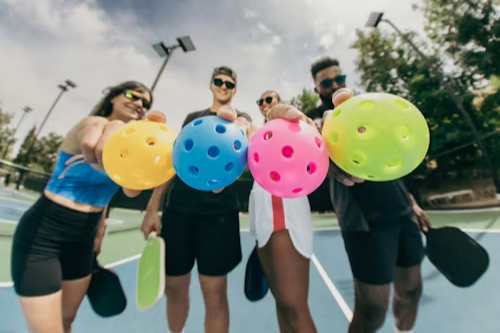
2. Pickleballs: Indoor vs Outdoor Matters More Than You Think
At first, I didn’t even know there were different types of pickleballs. A ball is a ball, right? Not quite.
The first time I played outdoors with an indoor ball, I was confused. The ball moved strangely, almost unpredictably, especially when the wind picked up. That’s when someone pointed out the difference.
- Indoor balls have larger holes and are lighter. They’re designed for smoother surfaces and controlled environments.
- Outdoor balls are heavier with smaller holes, built to handle wind and rougher courts.
Once I switched to the correct ball for each setting, the game felt much more consistent. It’s a small detail, but it can completely change how the game feels.
3. Shoes: The Underrated Game-Changer
This is one area I underestimated the most.
I showed up to my first few games wearing regular running shoes. They felt fine—until I started moving side to side more aggressively. That’s when I noticed the lack of support. I slipped once, nearly twisted my ankle, and realized I needed something better.
Pickleball involves a lot of lateral movement—quick side steps, sudden stops, and bursts of speed. Running shoes are designed for forward motion, not side-to-side stability.
Switching to court shoes (like tennis or volleyball shoes) made a huge difference. I felt grounded. More stable. More confident chasing after those tricky shots.
Look for shoes that offer:
- Good lateral support
- Non-marking soles (especially for indoor courts)
- Cushioning for comfort during longer games
Trust me—your feet will thank you.
4. Clothing: Comfort Over Style (But You Can Have Both)
At the beginning, I wore whatever I had—usually a T-shirt and gym shorts. That worked fine, but as I played more often, I started paying attention to how clothing affected my movement.
Sweat, heat, and restricted motion can sneak up on you. One game, I wore a heavier cotton shirt, and by the end, it felt like I was carrying extra weight.
Now, I stick to:
- Moisture-wicking fabrics
- Breathable materials
- Flexible athletic wear
It’s not about looking like a pro—it’s about feeling comfortable enough to focus on the game.
That said, there’s something fun about finding an outfit that makes you feel confident. Pickleball has a social side too, and when you feel good, you tend to play better.
5. Grip Tape and Accessories: Small Details, Big Impact
This was something I didn’t even think about at first.
After a few weeks of playing, I noticed my paddle grip becoming slippery, especially during longer sessions. My hand would sweat, and I’d start losing control during shots.
That’s when someone suggested overgrip tape.
It seemed like a minor upgrade, but it completely changed how secure the paddle felt in my hand. No slipping, no constant readjusting—just a firm, comfortable grip.
Other small accessories you might consider:
- Wristbands (to manage sweat)
- Hat or visor (for sunny outdoor games)
- Sunglasses (to track the ball more easily)
None of these are essential, but they can definitely enhance your experience.
6. Bag: Keeping It All Together
At first, I carried everything in a regular backpack. Paddle, balls, water bottle—it worked, but it got messy quickly.
Eventually, I upgraded to a simple pickleball bag. Nothing fancy, but it had compartments designed for paddles and balls. It made organizing everything easier and, honestly, made me feel a bit more “official.”
If you plan to play regularly, a dedicated bag is worth considering. It doesn’t have to be expensive—just practical.
7. Budgeting: You Don’t Need to Spend a Fortune
One of the biggest misconceptions I had was that I needed top-tier gear to enjoy the game. That’s simply not true.
Here’s a rough beginner-friendly budget:
- Paddle: $40–$100
- Balls: $10–$20
- Shoes: $60–$120
- Clothing: whatever you already have works fine
You can absolutely start playing without breaking the bank. As you improve and play more often, you’ll naturally figure out what upgrades are worth it.
8. The Emotional Side of Gear
This might sound strange, but your gear becomes part of your story.
I still remember my first paddle—the scuffs, the worn grip, the moments attached to it. The games I lost badly. The first rally that lasted longer than expected. The first time I actually felt like I knew what I was doing.
Upgrading my gear didn’t just improve my performance—it marked progress.
So don’t rush to get everything perfect from the start. Let your gear evolve with you.
9. Final Thoughts: It’s Not About the Gear—But It Kind of Is
At the end of the day, pickleball is about connection—whether it’s with the game, the people you play with, or even yourself.
Gear won’t make you a great player overnight. But the right gear can remove distractions. It can help you move more freely, play more comfortably, and enjoy the game more deeply.
And that’s really the goal, isn’t it?
Not perfection. Not competition. Just enjoyment.
So if you’re standing where I once stood—unsure of what to buy, overwhelmed by choices—start simple. Pick a paddle that feels right. Wear shoes that support you. Grab a few balls and step onto the court.
The rest will come with time.
And who knows? A few months from now, you might look back and smile at how it all began—with just a paddle, a ball, and a little curiosity.
Related Post
How to Avoid Fake Products Online: My Personal Story of Getting Scammed and the Lessons That Changed the Way I Shop Forever
How to Avoid Fake Products Online I remember the first time I got scammed online. [...]
Top 10 most popular rackets at RacketCentral
When it comes to the world of racquet sports, the choices can feel endless. Walking [...]