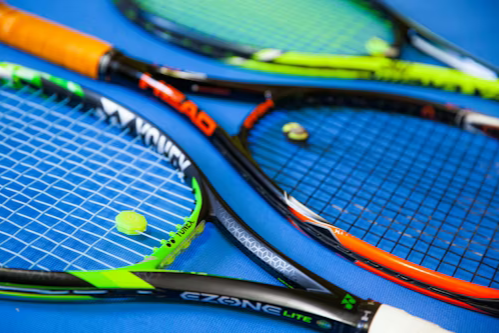
When Should You Replace Your Racket? My Personal Journey of Letting Go, Improving My Game, and Making the Right Upgrade
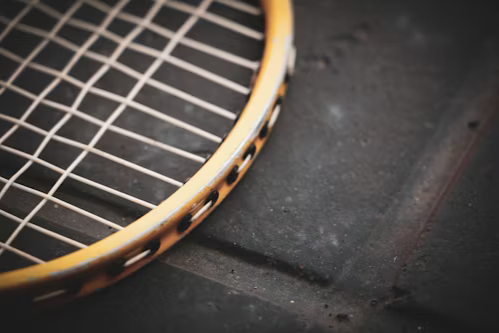
When Should You Replace Your Racket? A Story About Letting Go, Leveling Up, and Listening to Your Game
I didn’t realize my racket was holding me back until the day it betrayed me.
It wasn’t dramatic at first. No loud crack. No strings snapping mid-swing in some cinematic slow motion. Just a quiet, frustrating moment on court when a shot I had practiced a thousand times sailed long—far longer than it should have. I paused, looked at my racket, and for the first time, I wondered: Is it me… or is it this thing?
If you’ve ever played tennis long enough, you know that question. It creeps in slowly. At first, you ignore it. You blame your footwork, your timing, your focus. But eventually, if you’re paying attention, you start to notice patterns. Shots feel different. Control slips. Power becomes unpredictable. And somewhere along the way, your racket—the one that once felt like an extension of your arm—starts to feel like a stranger.
That’s when the real question appears: When should you replace your racket?
The Illusion of “If It’s Not Broken, Don’t Fix It”
For the longest time, I believed that as long as my racket wasn’t physically broken, I didn’t need a new one. No cracks? Good. Strings still intact? Even better. Grip a little worn? I’ll just wrap it again.
This mindset is common. It feels practical, even responsible. Why spend money if your equipment still “works”?
But here’s the truth no one tells beginners (and many intermediate players): a racket doesn’t need to visibly break to stop performing well.
Rackets age quietly.
Every time you hit the ball, the frame absorbs shock. Over time, that repeated stress weakens the structure in ways you can’t see. The racket might look perfectly fine, but its responsiveness, stability, and power can slowly degrade.
It’s like using an old pair of running shoes. They might still look okay, but the support is gone. You don’t notice it immediately—until your performance drops or something starts to hurt.
The First Sign: Your Shots Don’t Feel Like Yours Anymore
For me, the first real sign wasn’t visual. It was emotional.
My shots stopped feeling reliable.
Forehands that used to dip nicely inside the baseline started flying long. My backhand lost its clean, crisp contact. Even my serves—once a source of confidence—felt inconsistent.
At first, I blamed myself. I trained harder. I focused more. But the results didn’t match the effort.
That disconnect is important.
When your technique is stable but your results become unpredictable, your racket might be part of the problem. A worn-out frame or dead strings can reduce control and change how energy transfers from racket to ball.
It’s subtle, but it matters.
Strings: The Silent Culprit
Before replacing your entire racket, it’s worth asking: is it actually the strings?
Strings lose tension over time, even if they don’t break. And once they lose tension, they stop behaving the way they’re supposed to. The ball stays on the strings longer, launches higher, and becomes harder to control.
A general rule many players follow is:
Restring your racket as many times per year as you play per week.
So if you play three times a week, restring about three times a year.
But here’s the catch: if you’re using the same strings for over a year and playing regularly, they’re almost definitely “dead.” And dead strings can make a perfectly good racket feel terrible.
In my case, restringing helped—but only a little. It improved things temporarily, but something still felt off. That’s when I started considering the bigger step.
The Second Sign: Your Game Has Outgrown Your Racket
There’s another reason to replace your racket, and it has nothing to do with wear and tear.
Sometimes, you change.
When I first started playing, I used a lightweight, forgiving racket. It had a large head size and helped me generate power easily. It was perfect for a beginner.
But as I improved, my swing became faster and more controlled. I didn’t need as much “free power” anymore. In fact, that extra power started working against me.
Shots were harder to keep in. Precision became more important than forgiveness. And suddenly, my beginner-friendly racket didn’t match my more advanced game.
This is a big moment in any player’s journey.
Your racket should match your skill level and playing style. If you’ve improved significantly—better technique, faster swings, more intentional shot placement—your old racket might not be the right tool anymore.
It’s not that the racket is bad. It’s just not right for who you are now.
The Third Sign: Physical Discomfort
This is the one you should never ignore.
If your arm, wrist, or shoulder starts hurting more than usual after playing, your racket might be contributing to the problem.
An old or damaged frame can transmit more vibration. Incorrect string tension or type can also increase strain. Even the wrong grip size can cause discomfort over time.
I remember a phase where my wrist felt sore after almost every session. I thought I was overtraining. I tried resting, stretching, even adjusting my technique.
But the discomfort kept coming back.
Switching to a new racket—with a slightly different weight and better vibration dampening—made a noticeable difference within weeks.
Pain is your body’s way of saying something isn’t right. Don’t ignore it.
The Fourth Sign: Visible Damage (The Obvious One)
Of course, sometimes the answer is simple.
If your racket has cracks, dents, or structural damage, it’s time to replace it.
Even small cracks can affect performance and lead to bigger breaks during play. And once the frame integrity is compromised, the racket becomes unreliable—and potentially unsafe.
But interestingly, this is often the last sign, not the first.
Most rackets stop performing well long before they visibly break.
The Emotional Side of Letting Go
Replacing a racket isn’t just a practical decision. It can feel strangely emotional.
That racket has been with you through matches, wins, losses, long practice sessions, and moments of progress. It holds memories. It feels familiar.
Letting go of it can feel like closing a chapter.
I hesitated longer than I should have. Not because I didn’t need a new racket—but because I wasn’t ready to say goodbye to the old one.
But here’s what I learned:
Holding onto outdated equipment doesn’t honor your past—it limits your future.
Your growth as a player deserves tools that support it.
Choosing the Right Time
So, when should you replace your racket?
There isn’t a single exact answer, but here are some clear guidelines:
- Every 1–3 years if you play regularly
- Sooner if you play competitively or very frequently
- Immediately if there’s visible damage
- When your game changes significantly
- When performance feels inconsistent despite good technique
- When physical discomfort becomes noticeable
Think of it less as a fixed schedule and more as a combination of signals.
Your racket will tell you—if you’re paying attention.
What Happened When I Finally Switched
When I finally got a new racket, I didn’t expect a miracle.
And to be clear—it didn’t instantly make me a better player.
But something important changed.
My shots felt honest again.
When I hit well, the ball went where I intended. When I made a mistake, I could clearly feel why. There was no confusion, no randomness.
That clarity is powerful.
A good racket doesn’t play the game for you—but it lets you play your game without interference.
And that’s all you really need.
The Takeaway
Replacing your racket isn’t about chasing the newest model or copying what professionals use.
It’s about alignment.
Alignment between your skill and your equipment. Between your effort and your results. Between what you feel and what actually happens on the court.
If something feels off, don’t ignore it. Pay attention. Experiment. Ask questions.
Because sometimes, improving your game isn’t about working harder.
Sometimes, it’s about recognizing when it’s time to let go of what no longer serves you—and picking up something that does.
And when that moment comes, you’ll know.
It might not be dramatic.
But it will feel… right.
Related Post
Best value-for-money racketsBest Value-for-Money Rackets (2026 Guide – Best Budget Picks)Best value-for-money rackets
Last updated: March 2026 | Updated with latest budget racket tests I still remember my [...]
Real Player Review of the Best Rackets: Honest Insights on Power, Control, Comfort, and Finding the Right Fit for Your Game
Real Player Review: The Best Rackets — A Story from the Court I still remember [...]