How to Choose a Racket for Injury Prevention: My Personal Journey from Pain to Playing Smarter and Safer
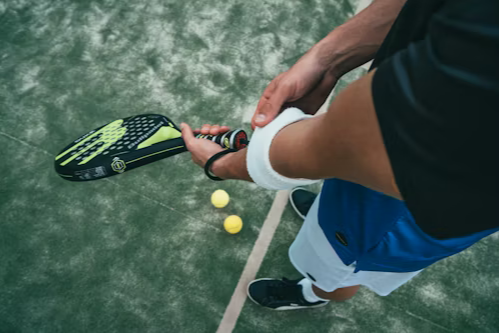
How to Choose a Racket for Injury Prevention – A Personal Journey Through Pain, Lessons, and Smarter Play
I didn’t think much about my racket when I first started playing.
Like most beginners, I was drawn to what looked good, what felt popular, or what my friends were using. I remember walking into a sports shop, picking up a sleek, brightly colored racket, swinging it a few times in the air, and thinking, “Yeah, this feels right.” That was it. No research, no understanding, no real thought about how it might affect my body.
At the time, I believed injuries happened to other people—older players, professionals pushing their limits, or those who trained too hard. Not someone like me, just playing casually, a few times a week.
I was wrong.
When the Pain Started
It didn’t happen all at once. At first, it was just a slight discomfort in my elbow after a long session. I brushed it off. Maybe I didn’t warm up properly. Maybe I played too long. Maybe I just needed rest.
But the discomfort didn’t go away.
It crept in slowly, turning into a dull ache that showed up earlier in each session. Then it started lingering even after I stopped playing. Eventually, even simple things—like lifting a bag or typing for too long—began to feel uncomfortable.
That’s when I realized something was off.
I hadn’t changed my playing frequency much. I wasn’t suddenly training harder. So what was causing it?
The answer, as I would later learn, was something I had overlooked from the very beginning: my racket.
The Hidden Role of Your Racket
A racket is more than just a tool to hit the ball. It’s an extension of your arm. Every swing you make transfers energy through your hand, wrist, elbow, and shoulder. And if your racket isn’t suited to your body or playing style, that energy doesn’t just disappear—it turns into strain.
At first, this idea felt a bit abstract to me. How could a piece of equipment cause that much trouble?
But once I started digging deeper, it all made sense.
Every racket has characteristics—weight, balance, stiffness, grip size, string tension—that directly affect how your body absorbs impact. And when those factors don’t match your physical condition or technique, your body compensates in ways that can lead to injury over time.
Lesson #1: Weight Matters More Than You Think
My first mistake was choosing a racket that was too heavy for me.
At the store, it felt powerful. Solid. “Professional.” I thought heavier meant better control and stronger shots.
What I didn’t realize was how that weight would affect me over time.
A heavier racket requires more strength to swing, especially repeatedly over long sessions. If your muscles aren’t conditioned for it, your joints—particularly your elbow and shoulder—end up taking extra stress.
In my case, every swing added a tiny bit of strain. Not enough to notice immediately, but enough to build up over days and weeks.
When I finally switched to a slightly lighter racket, the difference was immediate. My swings felt smoother. My arm felt less tired. And most importantly, the pain started to ease.
The lesson was simple:
Don’t choose a racket to impress others—choose one your body can handle comfortably over time.
Lesson #2: Balance Can Change Everything
At some point, I learned that rackets aren’t just “heavy” or “light”—they’re also balanced differently.
Some are head-heavy, meaning more weight is concentrated at the top. Others are head-light, with more weight near the handle.
I had been using a head-heavy racket, which helped generate power but required more effort to control. That extra effort translated into more strain on my wrist and elbow.
When I tried a head-light racket, it felt easier to maneuver. My reaction time improved, and my arm didn’t feel as overloaded.
It wasn’t that one type was objectively better than the other—it was about what suited me.
If you’re prone to arm discomfort or just starting out, a more balanced or head-light racket can reduce stress on your joints.
Lesson #3: Stiffness Isn’t Always Your Friend
This was something I had never considered before my injury.
Rackets can be stiff or flexible, and this affects how much shock is transferred to your arm when you hit the ball.
A stiffer racket gives you more power, but it also sends more vibration directly into your arm. A more flexible racket absorbs some of that impact, making it more forgiving.
Guess what I had chosen? A stiff racket.
At first, I liked the crisp feel. The shots felt sharp and powerful. But over time, that extra vibration contributed to my discomfort.
Switching to a slightly more flexible frame helped reduce that harsh feedback. It didn’t magically solve everything, but it made a noticeable difference.
Lesson #4: Grip Size – The Overlooked Detail
If there’s one thing I completely ignored in the beginning, it was grip size.
I just picked up whatever felt “okay” in the store. I didn’t measure my hand or ask for advice.
That turned out to be a mistake.
A grip that’s too small forces you to squeeze harder to maintain control, increasing tension in your forearm. A grip that’s too large limits your wrist movement and can also strain your arm.
Neither is ideal.
When I finally got a properly sized grip, it felt almost strange at first—but in a good way. I didn’t have to hold it as tightly. My swings felt more natural.
It was one of those small changes that had a big impact.
Lesson #5: Strings and Tension – The Silent Contributors
I used to think strings were just… strings.
I didn’t pay attention to their type or tension. I assumed they didn’t matter much unless you were a professional.
I couldn’t have been more wrong.
Higher string tension gives you more control, but it also increases the shock transmitted to your arm. Lower tension is more forgiving and absorbs more impact.
My racket had been strung at a relatively high tension. Combined with a stiff frame, it created a perfect recipe for discomfort.
When I lowered the tension slightly, the feel of the game changed. The ball stayed on the strings a bit longer, and the impact felt softer.
Again, it wasn’t about finding a “perfect” setting—it was about reducing unnecessary stress on my body.
Listening to Your Body
Looking back, the biggest mistake I made wasn’t choosing the wrong racket—it was ignoring the signals my body was sending me.
Pain isn’t something to push through blindly, especially when it comes to repetitive sports.
Your body is constantly giving feedback. A little soreness might be normal, but persistent discomfort is a sign that something needs to change.
In my case, I kept playing through the pain, thinking it would go away on its own. It didn’t.
Only when I started paying attention—and making adjustments—did things improve.
Finding the Right Racket Is Personal
If there’s one thing I’ve learned through this experience, it’s that there’s no “one-size-fits-all” racket.
What works for a professional athlete might not work for you. What feels great to your friend might not suit your body at all.
Choosing the right racket is a personal process.
It depends on:
- Your strength and physical condition
- Your playing style
- Your level of experience
- Any history of discomfort or injury
And sometimes, it takes a bit of trial and error.
Practical Tips I Wish I Knew Earlier
If I could go back and give my younger self some advice, it would be this:
1. Don’t rush the decision
Take your time. Try different rackets if possible. What feels good in a few swings should still feel good after an hour of play.
2. Prioritize comfort over power
Power is tempting, but comfort keeps you playing longer and healthier.
3. Ask for guidance
Talk to experienced players or coaches. Even a small piece of advice can save you weeks—or months—of discomfort.
4. Pay attention to early signs of strain
Don’t ignore small aches. They often grow into bigger problems.
5. Be willing to adjust
Your ideal racket might change as you improve or as your body adapts. Stay flexible in your choices.
Where I Am Now
Today, I play with a racket that suits me—not the flashiest, not the most expensive, but the one that feels right.
The pain that once worried me is gone. My sessions are more enjoyable. I can focus on improving my skills instead of worrying about discomfort.
And perhaps most importantly, I’ve developed a deeper respect for the connection between equipment and health.
It’s easy to think that performance is all about technique and practice. But sometimes, the tools we use play just as important a role.
Final Thoughts
Choosing a racket isn’t just about playing better—it’s about playing longer, safer, and with less risk of injury.
If you’re just starting out, or if you’ve been playing for a while but experiencing discomfort, take a moment to reflect on your equipment.
Ask yourself:
- Does my racket feel comfortable after extended play?
- Am I experiencing any consistent pain?
- Could a small change make a big difference?
Because sometimes, the solution isn’t in pushing harder—it’s in choosing smarter.
And trust me, your future self will thank you for it.
Related Post
Best String for Power vs Control: My Personal Journey of Finding the Perfect Balance for My Game
Best String for Power vs Control – Finding Your Balance on the Court I still [...]
How to Avoid Fake Products Online: My Personal Story of Getting Scammed and the Lessons That Changed the Way I Shop Forever
How to Avoid Fake Products Online I remember the first time I got scammed online. [...]