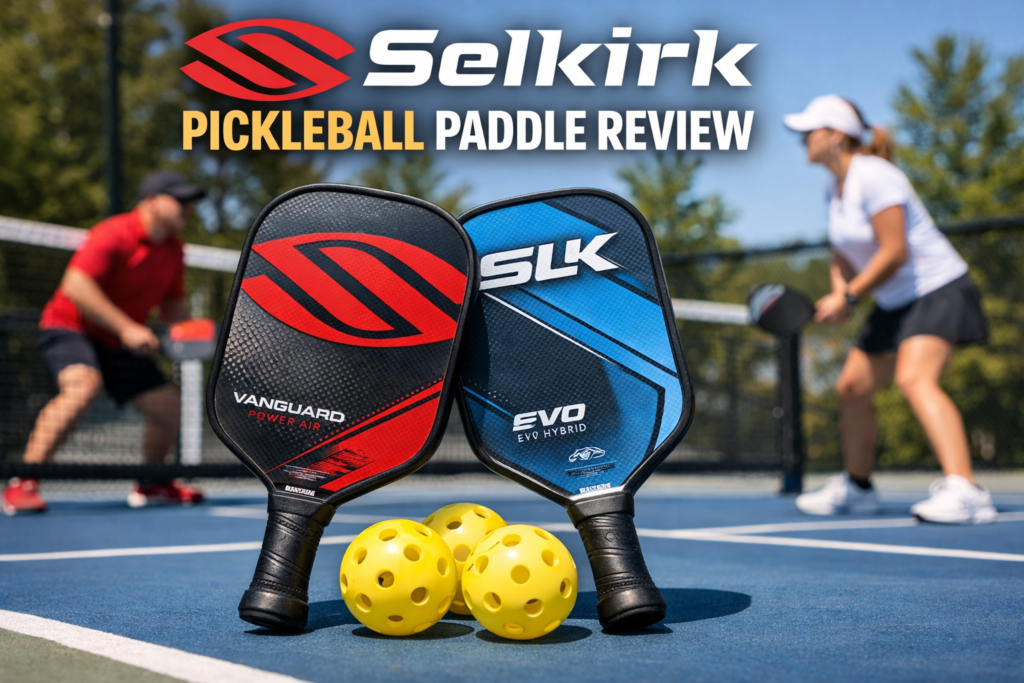
Selkirk Pickleball Paddle Review – A Journey from Curiosity to Confidence on the Court
I still remember the first time I picked up a pickleball paddle. It wasn’t anything fancy—just a basic one I borrowed from a friend who insisted I “had to try this sport.” At the time, I didn’t think much of it. It looked like a hybrid between a ping-pong paddle and a tennis racket, and honestly, I wasn’t expecting much.
Fast forward a few months, and I found myself completely hooked. The sound of the ball popping off the paddle, the quick reflex exchanges at the net, and the social energy of the game made it impossible to walk away. But as I played more, I started noticing something: my borrowed paddle was holding me back.
That’s when I began my search—and eventually landed on Selkirk.
First Impressions: More Than Just a Paddle
When I first heard about Selkirk, it wasn’t through flashy ads or big promotions. It was through players—serious ones. People who had clearly spent hours on the court would casually say, “Yeah, I switched to Selkirk, and it made a difference.”
That kind of organic reputation got my attention.
When my Selkirk paddle finally arrived, I remember opening the box slowly, almost like I didn’t want to ruin the moment. The design was clean but premium. Not overly loud, not trying too hard—just confident. The grip felt comfortable right away, and the weight distribution felt… intentional.
It didn’t feel like a beginner’s paddle. It felt like something that expected you to grow into it.
Build Quality: Where Craft Meets Performance
One thing that immediately stood out was the build quality. Selkirk paddles are known for their craftsmanship, and you can feel it the moment you hold one.
The surface texture had just enough grit to give you control over spin without feeling rough. The core—often made with their proprietary polymer blends—felt solid yet responsive. It wasn’t overly stiff, but it didn’t feel mushy either.
There’s a certain balance that’s hard to describe unless you’ve experienced both extremes. Some paddles feel too dead, absorbing too much energy. Others feel too lively, making control difficult. Selkirk sits right in that sweet spot.
And that matters more than you think.
Because in pickleball, control isn’t just about keeping the ball in play—it’s about placing it exactly where you want it, especially during those delicate dinks at the net.
On-Court Performance: The Real Test
Of course, none of this matters if the paddle doesn’t perform when it counts.
The first time I used my Selkirk paddle in a real game, I noticed the difference almost immediately. My shots felt more consistent. Not necessarily more powerful—but more reliable.
And that’s what changed everything.
1. Control and Precision
This is where Selkirk really shines.
During soft play—especially at the kitchen line—the paddle gave me the confidence to slow the game down. Instead of just reacting, I started thinking strategically. I could place the ball with more intention, making it harder for my opponent to attack.
Before, I used to rush my shots because I didn’t trust my paddle enough. Now, I found myself taking an extra fraction of a second, knowing the paddle would respond exactly how I expected.
2. Power When You Need It
Selkirk paddles aren’t known as the most aggressive power paddles on the market, but that’s not a weakness—it’s a design choice.
When I needed power—like during overhead smashes or drives from the baseline—it was there. But it didn’t feel uncontrollable. It felt like power that I could access when I wanted, not something that constantly got in the way.
That balance made a huge difference in my overall game.
3. Spin Potential
Spin is one of those things you don’t fully appreciate until you start using it effectively.
With my previous paddle, spin felt inconsistent. Sometimes it worked, sometimes it didn’t. With Selkirk, I started experimenting more—topspin drives, sliced returns, even subtle spins during dinks.
The paddle didn’t magically give me skills I didn’t have, but it made it easier to execute the techniques I was learning.
And that’s a big deal.
Comfort and Feel: The Unsung Hero
One thing that often gets overlooked in paddle reviews is comfort.
You can have the best performance paddle in the world, but if it feels uncomfortable after an hour of play, it’s not worth it.
Selkirk does an excellent job here.
The grip feels natural, and the vibration control is noticeably better than many entry-level paddles. After long sessions, my arm didn’t feel as fatigued, and I didn’t experience that slight sting you sometimes get from off-center hits.
This might not sound exciting, but over time, it makes a huge difference—especially if you’re playing regularly.
Different Selkirk Models: Finding Your Fit
One thing I quickly learned is that “Selkirk paddle” isn’t just one thing. They offer a range of models, each designed for different playing styles.
Selkirk Amped Series
This is often recommended for intermediate players, and for good reason. It offers a great balance between power and control. If you’re transitioning from beginner to more competitive play, this is a solid choice.
Selkirk Vanguard Series
This series leans more toward control and spin. If you enjoy a strategic, placement-focused game, this might be your best fit.
Selkirk Power Air Series
As the name suggests, this one is built for power. It’s more aggressive, more explosive—but still maintains a level of control that keeps it from feeling wild.
Choosing the right model depends on your style. And that’s something I didn’t fully understand at first.
I thought a paddle was just a paddle.
It’s not.
The Learning Curve: Growing Into the Paddle
Here’s something important that doesn’t get talked about enough: a good paddle won’t instantly make you a better player.
When I first switched to Selkirk, I actually struggled a bit. My timing was slightly off, and my shots felt different. It took a few sessions to adjust.
But once I did, the improvement was noticeable.
It’s kind of like switching from a basic instrument to a high-quality one. At first, it feels unfamiliar. But as you adapt, you realize how much more it allows you to express your skill.
That’s exactly what happened here.
Price vs Value: Is It Worth It?
Let’s address the obvious question: Selkirk paddles aren’t cheap.
When I was deciding whether to buy one, I hesitated. It felt like a big investment for a sport I hadn’t been playing that long.
But looking back, I don’t regret it.
Because it wasn’t just about the paddle—it was about the experience. It made the game more enjoyable, more consistent, and more rewarding.
If you’re playing occasionally, a cheaper paddle might be fine. But if you’re serious about improving, investing in a quality paddle like Selkirk makes sense.
What I Didn’t Like
To keep this review honest, there are a few downsides.
First, the price can be a barrier. Not everyone is ready to spend that much on a paddle.
Second, some models require an adjustment period. If you’re used to a very different paddle, the transition might feel awkward at first.
And finally, because Selkirk paddles are so well-balanced, some players who prefer extreme power or extreme softness might find them less specialized.
But for most players, these are minor trade-offs.
Final Thoughts: More Than Just Equipment
Looking back, switching to a Selkirk paddle wasn’t just about upgrading my gear—it was about taking the game more seriously.
It changed how I approached each match. I started thinking more, planning more, and playing with more intention.
And maybe that’s the real value of a good paddle.
Not just what it does—but what it allows you to become.
If you’re on the fence about trying Selkirk, I’d say this: don’t expect it to transform your game overnight. But if you’re willing to put in the time, it might just become one of the best decisions you make on the court.
Because sometimes, the right tool doesn’t just improve your performance—it changes your entire experience.
And for me, that’s exactly what Selkirk did.