When I first started paying attention to racket performance, I didn’t think it would become something I’d obsess over. At the time, a racket was just a tool—something you picked up, swung, and hoped would cooperate. But over time, as matches got tighter and my expectations grew, I began to notice subtle differences. The way one racket seemed to forgive my mistakes while another punished every off-center hit. The way some gave me confidence, while others quietly chipped away at it.
That’s where this comparison really begins—not in a lab or a spec sheet, but on the court, in those small moments where performance starts to matter more than convenience.
The First Realization: Not All Rackets Feel the Same
I remember the first time I switched rackets mid-session. It wasn’t planned. A friend handed me his, saying, “Try this—you might like it.” I didn’t expect much. But within a few rallies, something felt… different.
The ball came off the strings with a cleaner sound. My shots had a little more depth without extra effort. And strangely, my timing felt more natural, like the racket was doing part of the work for me.
That was the moment I realized: racket performance isn’t just about numbers—it’s about feel. And feel is something you can’t fully understand until you experience it.
Power vs Control: The Eternal Trade-Off
As I started experimenting with different rackets, one theme kept showing up: power versus control.
Some rackets felt like they were built to launch the ball. You barely had to swing, and the shuttle or ball would fly deep into the court. These were great when I was tired or under pressure, but they came with a cost. Precision became harder. It felt like trying to write neatly with a thick marker.
On the other hand, control-oriented rackets demanded more effort. You had to generate your own power, but in return, they gave you accuracy. Every shot felt intentional. Drops landed closer to the net, and placement became more predictable.
At first, I thought the solution was obvious—just pick one based on your style. But it’s not that simple. Your style evolves. Your strengths change. And sometimes, the racket that fits you today might not be the one you need tomorrow.
Weight and Balance: The Hidden Influencers
If you had asked me early on what mattered most in a racket, I probably would’ve said brand or design. But after testing more options, I realized weight and balance are the real game changers.
A heavier racket gives you stability and power. When you connect well, the shot feels solid and authoritative. But over time, especially in long matches, that weight can slow you down. Your reactions become just a fraction slower—and in fast-paced games, that fraction matters.
Lighter rackets, on the other hand, feel quick and responsive. They’re easier to maneuver, especially during defensive play. You can react faster, adjust mid-swing, and stay agile. But sometimes, they lack the punch you need to finish a rally.
Then there’s balance—head-heavy versus head-light. A head-heavy racket feels like it pulls through the swing, adding momentum and power. A head-light one feels nimble, almost effortless to control.
I found myself constantly switching between these, trying to figure out which one truly suited me. And honestly, the answer wasn’t consistent. It depended on the day, the opponent, and even my mood.
String Tension: The Detail That Changes Everything
For a long time, I underestimated string tension. It seemed like a minor adjustment—something only advanced players worried about. But once I started experimenting with it, I realized how dramatically it affects performance.
Lower tension gives you more power and a larger sweet spot. It’s forgiving, especially when your timing isn’t perfect. But the trade-off is less control. Shots can feel a bit “bouncy,” and precision becomes harder to maintain.
Higher tension, however, offers control and a crisp response. Every hit feels sharp and defined. But it demands accuracy. If you miss the sweet spot, you’ll feel it immediately.
I remember one session where I increased the tension slightly. At first, everything felt off. My shots were falling short, and I couldn’t find my rhythm. But after adjusting, something clicked. My placement improved, and I started playing more deliberately.
It taught me an important lesson: performance isn’t just about the racket itself—it’s about how you set it up.
Material and Technology: Do They Really Matter?
Every racket claims to have some kind of advanced technology—carbon layers, vibration dampening systems, aerodynamic frames. At first, I was skeptical. It felt like marketing more than substance.
But after trying enough rackets, I started noticing patterns. Some materials genuinely reduce vibration, making off-center hits less jarring. Others improve stability, so the racket doesn’t twist as much on impact.
Still, the difference isn’t always dramatic. It’s subtle. And sometimes, those subtle changes only become noticeable after extended use.
What I’ve learned is this: technology can enhance performance, but it won’t transform your game overnight. It’s more like fine-tuning than a complete upgrade.
The Psychological Factor
One aspect that often gets overlooked in racket performance is confidence.
There were times when I played better simply because I believed in the racket I was using. It felt right in my hand, and that translated into better decisions, smoother swings, and more consistent play.
On the flip side, using a racket that didn’t suit me—even if it was objectively “good”—made me second-guess myself. I’d hesitate, adjust unnecessarily, and lose focus.
It made me realize that performance isn’t purely physical. There’s a mental component. The right racket doesn’t just improve your shots—it changes how you approach the game.
Comparing Popular Choices: A Personal Perspective
Over time, I’ve had the chance to try a variety of rackets across different brands and categories. While I won’t dive into specific models here, I can share general impressions.
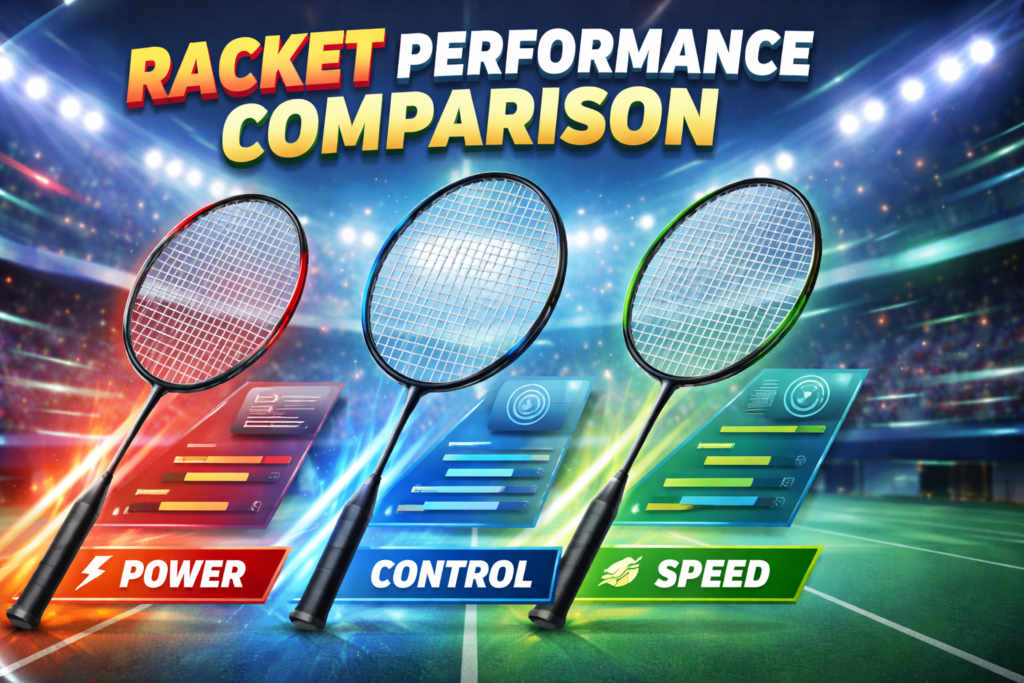
Some brands lean toward power. Their rackets feel strong, almost aggressive. They’re great for players who like to dominate rallies and finish points quickly.
Others focus on control and finesse. These rackets feel precise, almost surgical. They reward technique and patience.
Then there are the balanced options—the ones that try to offer a bit of everything. These are often the most accessible, especially for intermediate players who are still refining their style.
But here’s the thing: no racket is perfect. Each one is a compromise. The goal isn’t to find the best racket overall—it’s to find the best racket for you.
Lessons Learned Along the Way
Looking back, my journey with racket performance has been less about finding answers and more about asking better questions.
Instead of asking, “Which racket is the best?” I started asking:
- What do I need more of in my game right now?
- Where am I struggling, and can a different setup help?
- Do I value consistency over power, or vice versa?
These questions led me to better choices—not perfect ones, but more informed ones.
The Role of Experience
One thing I didn’t expect was how much my perception of racket performance would change over time.
A racket that felt amazing when I first tried it sometimes lost its appeal after a few weeks. And others that felt awkward at first gradually became favorites as I adapted.
It made me realize that first impressions can be misleading. True performance reveals itself over time, through repeated use and different playing conditions.
Finding Your Own Balance
If there’s one takeaway from all of this, it’s that racket performance is deeply personal.
What works for one player might not work for another. And even for the same player, preferences can shift.
So instead of chasing trends or relying solely on reviews, it’s worth taking the time to experiment. Try different weights, balances, and tensions. Pay attention to how each setup feels—not just during your best moments, but also when you’re under pressure.
Because in the end, performance isn’t about perfection. It’s about consistency, comfort, and confidence.
Closing Thoughts
When I think about racket performance now, I don’t see it as a technical comparison anymore. It’s more like a conversation—between you, your equipment, and the game itself.
Each racket tells a slightly different story. Some emphasize power, others control, and some try to balance both. But none of them define your ability. They only shape how you express it.
And maybe that’s the most important realization of all.
The right racket won’t make you a completely different player. But it can help you become a better version of the one you already are.
And sometimes, that’s more than enough.