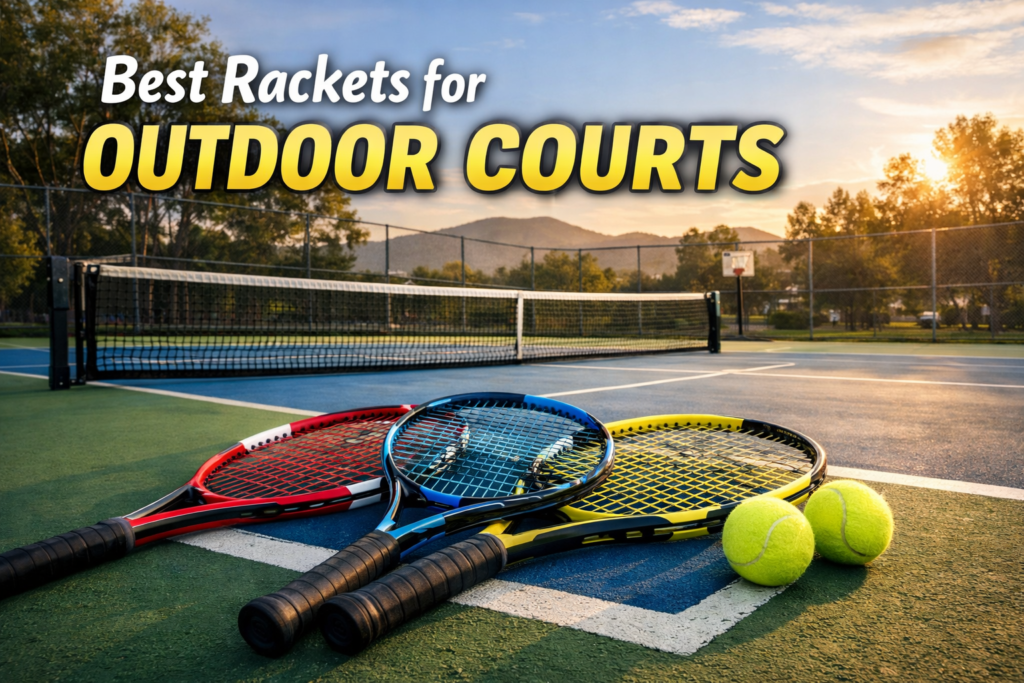
When I first started playing on outdoor courts, I didn’t think much about my racket. A racket was just… a racket, right? Something you pick up, swing, and hope the ball goes where you want it to. But after a few frustrating matches—balls flying long, vibrations stinging my arm, and the wind turning my shots into unpredictable disasters—I realized something important: outdoor tennis is a completely different game. And the racket you use can quietly make or break your experience.
This realization didn’t come all at once. It crept in slowly, through small moments. A windy afternoon where I couldn’t control a single forehand. A match under the blazing sun where my grip felt slippery and my timing was off. Or the time I borrowed a friend’s racket and suddenly felt like I could actually feel the ball. That moment stuck with me.
So if you’re here wondering what the best rackets for outdoor courts are, I won’t just throw a list at you. Instead, let me walk you through what I’ve learned—through trial, error, and a lot of time under the sun.
Outdoor Courts Are Unforgiving—And That Changes Everything
Indoor courts are predictable. No wind, consistent lighting, smooth conditions. Outdoor courts? They have personality.
The wind is your invisible opponent. The sun can mess with your vision. The court surface—whether it’s hard, clay, or asphalt—can change how the ball behaves. And all of these factors affect how your racket performs.
I remember one particular game on a breezy afternoon. Every time I tried to hit a clean topspin shot, the wind would nudge the ball just enough to throw off my timing. My racket, which felt perfectly fine indoors, suddenly felt too light, too unstable. That’s when I realized: stability matters outdoors more than I ever thought.
What Actually Makes a Racket “Good” for Outdoor Play?
Before we dive into specific rackets, it helps to understand what you’re really looking for.
1. Stability Over Power
Outdoors, you don’t just need power—you need control in unpredictable conditions. A slightly heavier racket (but not too heavy) can help keep your shots steady when the wind tries to interfere.
I used to prefer lighter rackets because they felt easier to swing. But outdoors, they often felt shaky. Once I switched to something with a bit more weight, everything changed. My shots felt more grounded, more intentional.
2. Spin Is Your Best Friend
When you’re playing outside, topspin can save you. It helps bring the ball down into the court even if you hit with more force.
That’s why rackets with open string patterns (like 16×19) tend to perform better outdoors. They allow you to generate more spin naturally, which gives you a margin for error.
3. Comfort Matters More Than You Think
Outdoor courts can be tough on your body. The surface is often harder, and the vibrations can travel straight through your arm.
There was a time when I ignored this completely—until my elbow started aching after long sessions. Switching to a more arm-friendly racket made a huge difference. It wasn’t just about performance anymore; it was about being able to keep playing without discomfort.
4. Durability Is Key
Sun, heat, dust—outdoor conditions aren’t gentle. A racket that feels great but wears down quickly isn’t going to serve you well in the long run.
Rackets That Truly Shine Outdoors
Over time, I’ve tried quite a few rackets. Some were hyped but didn’t live up to expectations outdoors. Others surprised me in the best way. Here are a few that stood out—not just because of specs, but because of how they felt in real outdoor play.
1. Wilson Clash 100
The first time I used the Wilson Clash 100 outdoors, I noticed something immediately: comfort.
It has this unique flexibility that absorbs shock really well. On hard outdoor courts, where every hit can feel a bit harsher, this makes a big difference. My arm felt less tired, even after long rallies.
But what really impressed me was how forgiving it is. Even when I didn’t hit the ball perfectly (which happens a lot outdoors), the racket still gave me a decent shot.
It’s not the most powerful racket out there, but for outdoor play, that’s not necessarily a bad thing. Control and comfort often matter more.
2. Babolat Pure Aero
If there’s one racket that feels like it was made for outdoor tennis, it’s this one.
The Pure Aero is all about spin. And outdoors, spin is everything. I remember hitting a heavy topspin forehand on a windy day and watching the ball dip perfectly into the court. That’s when I understood why so many players love this racket.
It does require a bit of technique to get the most out of it, though. If you’re just starting out, it might feel a little demanding. But once you get used to it, it can transform your game.
3. Head Speed MP
This one sits right in the middle—a perfect balance of power, control, and feel.
What I like most about the Head Speed MP is its versatility. Whether I’m playing on a calm morning or a windy afternoon, it adapts well. It doesn’t excel in just one area—it performs consistently across the board.
Sometimes, that’s exactly what you need outdoors: something reliable.
4. Yonex Ezone 100
There’s something about Yonex rackets that feels different—in a good way.
The Ezone 100 has a slightly larger sweet spot, which makes it incredibly forgiving. And outdoors, where perfect timing is harder to achieve, that forgiveness is invaluable.
I remember playing a match where I was constantly a step late because of the sun in my eyes. Even then, the racket helped me stay in the rally.
It also offers a nice blend of power and comfort, making it a great choice for players who want a bit of everything.
5. Wilson Blade 98 (16×19)
This one is for players who love control.
The Blade 98 doesn’t give you free power—you have to generate it yourself. But in return, it gives you precision. And outdoors, where conditions can be chaotic, that precision can be a huge advantage.
I found that when I was fully focused, this racket helped me place shots exactly where I wanted. But on off days, it could feel a bit unforgiving.
So if you’re confident in your technique, this is a fantastic option.
Choosing the Right One for You
Here’s the thing: the “best” racket isn’t the same for everyone.
I’ve seen players thrive with rackets that didn’t work for me at all. And that’s okay. What matters is how it feels in your hand, in your swing, in your game.
If you’re just starting out, I’d suggest going for something more forgiving—like the Wilson Clash or Yonex Ezone. They make the game easier and more enjoyable.
If you’re more advanced and want to shape your shots, the Babolat Pure Aero or Wilson Blade might be better fits.
And if you want something balanced, the Head Speed MP is hard to go wrong with.
A Few Lessons I Learned the Hard Way
Looking back, I made a lot of mistakes when choosing my rackets.
I focused too much on what professionals were using. I ignored how the racket actually felt for me. And I underestimated how much outdoor conditions would affect my game.
If I could give you one piece of advice, it would be this: don’t chase perfection—chase comfort and confidence.
Because at the end of the day, the best racket is the one that makes you want to play more. The one that feels like an extension of your arm. The one that gives you just enough confidence to go for that shot, even when the wind is against you.
Final Thoughts
Outdoor tennis has a way of teaching you patience. You can’t control the wind, the sun, or the court. But you can control how you adapt.
And your racket plays a bigger role in that than you might expect.
It’s not just a tool—it’s your partner out there. Quietly supporting you, absorbing the shock, helping you shape your shots. When you find the right one, you’ll feel it. Not in a dramatic, life-changing way—but in the small moments. A cleaner hit. A more confident swing. A rally that lasts just a little longer.
And those moments? They add up.
So take your time. Try different rackets if you can. Pay attention to how they feel, not just how they’re rated.
Because somewhere out there, there’s a racket that fits your game—and once you find it, outdoor tennis becomes a whole new experience.