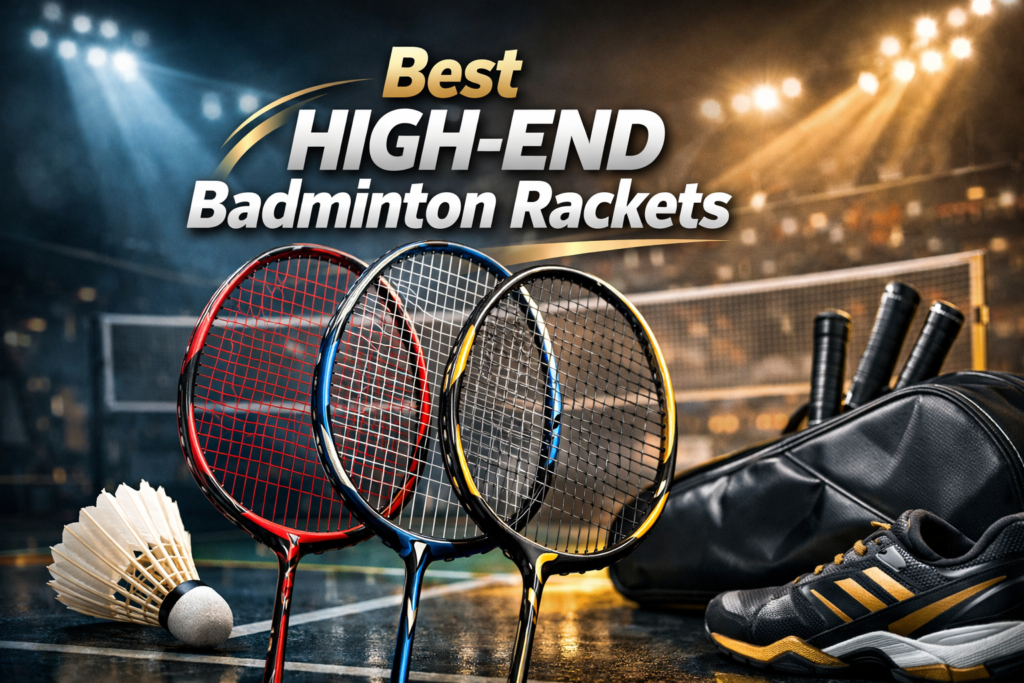
When I first picked up a badminton racket, I didn’t think much about what it was made of, who designed it, or why some players spoke about their rackets with the same reverence others reserved for prized possessions. To me, it was just a tool—light, simple, and replaceable. But that perspective changed the moment I held my first high-end badminton racket. It felt different. Not just in weight or balance, but in presence. It was as if the racket had a personality, quietly promising performance I hadn’t yet unlocked.
That moment marked the beginning of my fascination with high-end badminton rackets—a world where engineering meets artistry, and where every detail, from frame composition to string tension, plays a role in shaping how the game feels.
The First Encounter with Excellence
I still remember walking into a sports store, overwhelmed by the wall of rackets hanging in perfect rows. At first glance, they all looked similar—sleek frames, tight strings, bold colors. But as I got closer, I noticed subtle differences: some were slightly head-heavy, others incredibly light, some with aerodynamic frames that seemed designed to cut through air effortlessly.
A store assistant handed me a Yonex Astrox 100ZZ. I had heard the name before—whispered among players who took the game seriously. The moment I swung it, even without a shuttlecock, I felt a distinct snap in the air. It was powerful, controlled, and responsive. That was the moment I realized: not all rackets are created equal.
What Makes a Racket “High-End”?
Before diving into specific models, it’s worth understanding what sets high-end badminton rackets apart.
First, there’s the material. Premium rackets are typically made from high-modulus graphite, often reinforced with advanced materials like tungsten or Namd (a technology developed by Yonex to improve shaft flex and energy transfer). These materials aren’t just buzzwords—they directly impact how energy flows from your arm into the shuttle.
Then comes balance. High-end rackets are finely tuned to match specific playing styles:
- Head-heavy rackets offer explosive power for smashes.
- Head-light rackets provide speed and control, ideal for defensive play.
- Even-balanced rackets aim for versatility.
And finally, there’s craftsmanship. The precision in frame design, string bed consistency, and shaft flexibility all contribute to a racket that feels like an extension of your body rather than just equipment.
The Legends of the Court
Over time, I began to explore some of the most renowned high-end rackets—each with its own story, its own identity.
Yonex Astrox 100ZZ
If power had a physical form, this racket would come close. Designed for aggressive players, the Astrox 100ZZ is built to deliver steep, powerful smashes. What stood out to me wasn’t just the force behind each shot, but the confidence it inspired. It demanded precision, but rewarded commitment.
Playing with it felt like stepping into a more serious version of myself—one that wasn’t afraid to attack.
Yonex Arcsaber 11 Pro
In contrast, the Arcsaber 11 Pro felt like a conversation rather than a statement. It emphasized control, holding the shuttle just a fraction longer on the string bed. That tiny delay translated into remarkable accuracy.
I found myself playing more thoughtfully, placing shots instead of forcing them. It taught me patience—something I didn’t expect to learn from a piece of equipment.
Li-Ning Aeronaut 9000C
The first time I tried a Li-Ning racket, I was skeptical. Yonex had dominated my perception of quality for so long. But the Aeronaut 9000C changed that instantly.
Its unique air-stream channel design reduced drag, making swings feel incredibly smooth. There was a quiet efficiency to it—no wasted motion, no unnecessary resistance. It didn’t try to impress loudly; it simply performed, consistently and reliably.
Victor Thruster F Enhanced Edition
Victor rackets often feel like hidden gems, and the Thruster F Enhanced Edition is no exception. It combines power with a surprising level of maneuverability.
What I appreciated most was its versatility. Whether I was smashing from the backcourt or reacting quickly at the net, it adapted effortlessly. It felt like a partner that understood the rhythm of the game.
The Emotional Side of Equipment
It might sound strange to someone outside the sport, but choosing a high-end badminton racket is not just a technical decision—it’s an emotional one.
Each racket you try leaves an impression. Some feel too stiff, others too flexible. Some demand more strength than you can comfortably give, while others seem to compensate for your weaknesses.
Over time, you start to notice patterns. You learn what suits you—not just physically, but mentally. Do you prefer the reassurance of control, or the thrill of power? Do you want a racket that forgives mistakes, or one that pushes you to improve?
For me, the journey wasn’t about finding the “best” racket. It was about finding the one that felt like mine.
The Price of Precision
High-end badminton rackets are not cheap. Some models can cost as much as a decent smartphone. At first, that seemed excessive to me. How could a racket justify such a price?
But as I spent more time playing, I began to understand. You’re not just paying for materials—you’re paying for research, innovation, and refinement. You’re paying for the countless iterations that led to that final design.
And more importantly, you’re paying for experience.
A good racket doesn’t just improve your game—it changes how you experience the game. Shots feel cleaner. Movements feel smoother. There’s a certain satisfaction in knowing that your equipment is not holding you back.
The Learning Curve
One thing I didn’t expect was how much adjustment a high-end racket would require.
When I first switched from a beginner racket to a premium one, my timing was off. Shots that used to land comfortably started going long or into the net. It was frustrating.
But gradually, I adapted. I learned to trust the racket, to adjust my swing, to refine my technique. In a way, the racket became a teacher—demanding, but fair.
It reminded me that better equipment doesn’t automatically make you a better player. It simply reveals your true level more clearly.
Choosing the Right One
If there’s one piece of advice I would give to anyone considering a high-end badminton racket, it’s this: don’t chase trends.
Just because a professional player uses a certain model doesn’t mean it’s right for you. Their playing style, strength, and skill level are entirely different.
Instead, focus on understanding yourself:
- How do you play?
- What are your strengths?
- Where do you struggle?
Try different rackets if you can. Pay attention to how they feel, not just how they’re marketed. The right racket will resonate with you in a way that’s hard to explain but easy to recognize.
Beyond the Racket
As my appreciation for high-end rackets grew, so did my respect for the game itself.
I started noticing details I had previously ignored—the sound of a clean hit, the subtle changes in shuttle speed, the importance of footwork. The racket was no longer just a tool; it was a lens through which I experienced badminton more deeply.
And perhaps that’s the true value of high-end equipment. It doesn’t just enhance performance—it enhances awareness.
A Personal Reflection
Looking back, I realize that my journey with badminton rackets mirrors my journey as a player.
I began with simplicity, unaware of the nuances. Then came curiosity, followed by experimentation, frustration, and eventually understanding.
Today, when I pick up a high-end racket, I don’t just think about its specifications. I think about the countless games it will be part of, the victories it might witness, the lessons it will quietly teach.
Because in the end, a racket is more than carbon fiber and strings. It’s a companion in a game that challenges, humbles, and rewards in equal measure.
And maybe that’s why choosing the right one feels so important.
Not because it will make you perfect—but because it will be there with you as you try.