Best Rackets for Professionals: How to Choose High-Performance Rackets for Precision, Power, Control, and Ultimate Confidence at the Highest Level of Competition
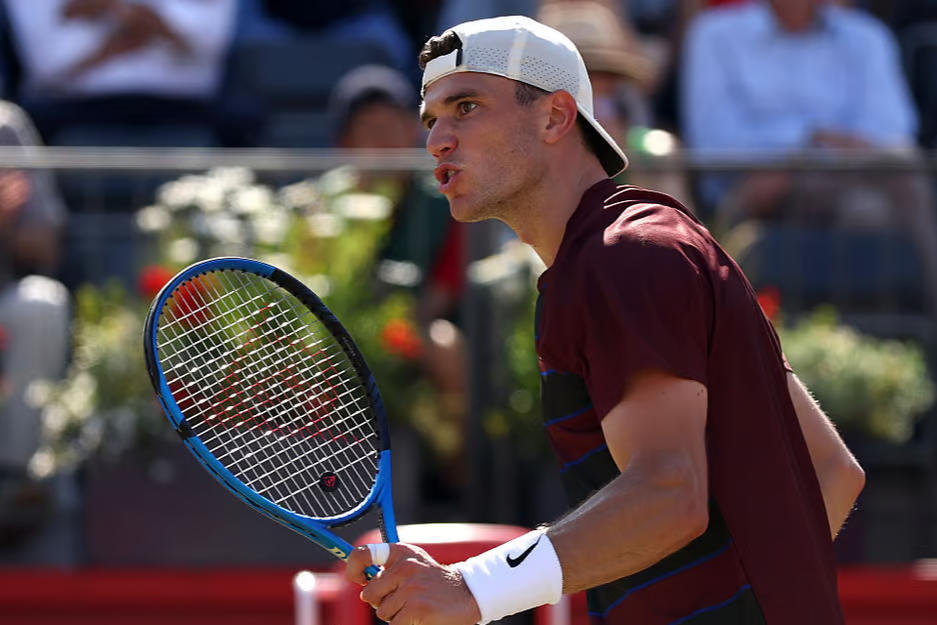
Best Rackets for Professionals: A Journey Through Precision, Power, and Personal Choice
I still remember the first time I held a professional-grade racket in my hands. It felt different—not just lighter or more balanced, but somehow more alive. The grip molded into my palm as if it had been waiting for me, and when I swung it, there was a kind of quiet confidence in the motion. That moment changed the way I understood the game. A racket, I realized, is not just equipment. It is an extension of the player.
Over the years, watching professionals compete at the highest levels—whether on tennis courts blazing under the sun or badminton arenas echoing with sharp smashes—I began to notice something subtle but important: no two professionals truly use the same racket in the same way. Even when they endorse identical models, their choices are shaped by style, experience, and instinct. So when we talk about the “best rackets for professionals,” we’re not just listing brands—we’re telling stories of how performance meets personality.
The Myth of the “Perfect” Racket
At first, I thought there must be a universally accepted “best racket.” After all, professional players demand excellence, and brands constantly compete to create cutting-edge designs. But the deeper I looked, the more I realized that perfection in rackets is deeply subjective.
Take Roger Federer, for example. His Wilson Pro Staff became iconic not just because of its design, but because of how it complemented his elegant, precise style. Meanwhile, Rafael Nadal’s Babolat Pure Aero is built for spin and aggression, matching his powerful, relentless gameplay. Both are legends, yet their rackets are fundamentally different.
This contrast taught me something important: the best racket is not the one with the most advanced technology—it’s the one that amplifies your strengths and supports your weaknesses.
Understanding What Professionals Look For
When professionals choose a racket, they don’t just pick it off a shelf. Every detail matters, and every feature serves a purpose.
1. Balance and Weight
One of the first things professionals consider is the balance of the racket. A head-heavy racket provides more power, making it ideal for aggressive baseline players or those who rely on strong smashes. On the other hand, a head-light racket offers better control and maneuverability, perfect for quick reactions and net play.
I once spoke to a coach who described it beautifully: “The racket should feel like a natural extension of your arm—not something you have to fight against.”
2. String Pattern and Tension
The string pattern plays a crucial role in determining how the ball behaves on impact. Open string patterns allow for more spin, while dense patterns offer greater control. Professionals often customize their string tension down to the smallest detail, adjusting it based on court conditions and even weather.
It’s fascinating to think that a difference of just a few pounds in string tension can completely change how a racket performs.
3. Frame Stiffness
A stiffer frame generates more power but transmits more vibration to the arm. A more flexible frame provides better feel and comfort but may sacrifice some power. Professionals carefully balance these factors to match their playing style and physical condition.
Iconic Rackets That Defined the Game
Over time, certain rackets have risen above the rest—not because they are objectively superior, but because they became inseparable from the players who wielded them.
Wilson Pro Staff Series
There’s something timeless about the Pro Staff line. Known for its precision and control, it has been the weapon of choice for players who rely on finesse and strategic shot placement. Holding one feels like holding a piece of tennis history.
Babolat Pure Drive and Pure Aero
Babolat changed the game by focusing on power and spin. The Pure Drive is often associated with explosive baseline play, while the Pure Aero caters to players who want to dominate with heavy topspin. These rackets are bold, unapologetic, and built for modern, aggressive tennis.
Head Graphene Series
Head introduced Graphene technology to enhance stability and energy transfer. The result is a racket that feels solid yet responsive. Many professionals appreciate its versatility, making it suitable for a wide range of playing styles.
Yonex Ezone and VCORE
Yonex stands out with its unique isometric head shape, which increases the sweet spot. For professionals, this means more consistency and forgiveness without sacrificing precision. It’s a subtle innovation, but one that makes a noticeable difference.
The Emotional Connection
What surprised me the most in my journey was how emotional the relationship between a player and their racket can be. Professionals often stick with a particular model for years, even when newer versions are released.
There’s a sense of trust that develops over time. A racket becomes familiar, predictable, reliable. In high-pressure moments—match points, tie-breaks, championship finals—that trust can make all the difference.
I once watched an interview where a player described switching rackets as “starting over.” That statement stayed with me. It made me realize that choosing a racket is not just a technical decision—it’s a personal one.
How Technology Continues to Evolve
The world of professional rackets is constantly evolving. Manufacturers are always experimenting with new materials, designs, and technologies to gain even the slightest edge.
From carbon fiber enhancements to vibration-dampening systems, modern rackets are engineered with incredible precision. Yet, despite all this innovation, the core principles remain the same: balance, control, power, and feel.
It’s almost poetic—no matter how advanced the technology becomes, the essence of the game still comes down to the connection between the player and the racket.
Choosing the Right Racket: Lessons from the Pros
If there’s one thing I’ve learned from observing professionals, it’s that choosing the right racket requires patience and self-awareness.
You have to ask yourself:
- What kind of player am I?
- Do I rely on power or control?
- Am I comfortable at the net, or do I dominate from the baseline?
- What feels natural in my hand?
Professionals spend years refining these answers, but even beginners can benefit from asking the same questions.
It’s tempting to choose a racket simply because your favorite player uses it. I’ve been there. But what works for them may not work for you. The key is to find a racket that complements your own unique style.
A Personal Reflection
Looking back, my understanding of rackets has changed dramatically. What once seemed like a simple piece of equipment has become something far more meaningful.
Every scratch on the frame, every worn-out grip, every restringing session tells a story. It’s a story of effort, growth, frustration, and triumph.
And maybe that’s why the question “What is the best racket for professionals?” doesn’t have a single answer.
Because the best racket is not defined by brand, price, or popularity.
It’s defined by how it makes you feel when you step onto the court.
Final Thoughts
In the end, professional rackets are not just about performance—they are about identity. They reflect the player’s style, mindset, and journey.
Whether it’s the precision of a Wilson Pro Staff, the power of a Babolat Pure Aero, the versatility of a Head Graphene, or the innovation of a Yonex frame, each racket tells a different story.
And as I continue my own journey in the sport, I’ve come to appreciate that choosing a racket is not about finding perfection.
It’s about finding connection.
Because when you finally find the right one, you don’t just play better.
You play like yourself.
Related Post

How to Choose the Right Racket for Doubles: My Personal Journey of Speed, Control, and Finding the Perfect Match
How to Choose the Right Racket for Doubles — A Personal Journey into Finding the [...]
Why your racket feels unstableWhy Your Racket Feels Unstable: My Personal Journey of Confusion, Small Mistakes, and Discovering the Real CausesWhy your racket feels unstable
Why Your Racket Feels Unstable — And What It’s Really Trying to Tell You I [...]