Why Cheap Rackets Fail: My Personal Journey from Saving Money to Learning the True Cost of Low-Quality Equipment
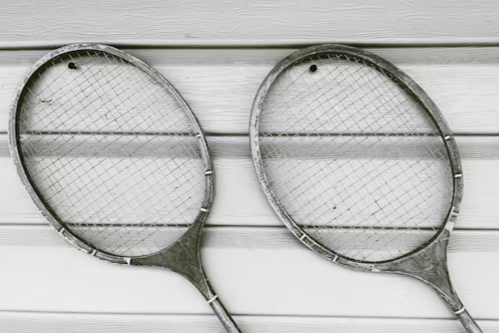
Why Cheap Rackets Fail (And What They Taught Me About the Game)
I still remember the first racket I ever bought with my own money. It wasn’t anything special—at least not by the standards of serious players—but to me, it felt like a badge of independence. I had spent weeks saving up, skipping snacks at school, doing odd jobs for neighbors, and convincing myself that I didn’t need anything fancy. “A racket is a racket,” I told myself. “It’s all about skill anyway.”
So I walked into a small sports shop, ignored the glossy premium models hanging proudly on the wall, and picked the cheapest one that looked halfway decent. It had bright colors, a lightweight frame, and a price tag that didn’t make my wallet flinch. I walked out feeling smart—like I had beaten the system.
It didn’t take long to realize I hadn’t.
The Illusion of a Good Deal
At first, everything felt fine. The racket was light, easy to swing, and it made a satisfying sound when it connected with the ball (or shuttle, depending on the sport you’re imagining). I convinced myself I had made the right choice.
But slowly, small things started to feel… off.
My shots lacked consistency. Sometimes the ball would fly exactly where I wanted; other times, it would veer off unpredictably. I blamed my technique at first. Maybe my timing was wrong. Maybe I needed more practice. That’s what everyone says, right?
But then I noticed something else: even when I hit what felt like a perfect shot, the result didn’t match the effort. There was a disconnect between intention and outcome.
That’s when doubt crept in—not about my skill, but about the tool in my hand.
When Cheap Starts to Show
Over time, the cracks—both literal and metaphorical—began to appear.
The grip wore out faster than expected. It became slippery, forcing me to adjust my hold constantly. The strings lost tension quickly, making the racket feel dull and lifeless. The frame, which once felt light and agile, started to feel unstable, almost fragile under pressure.
I remember one particular game. It was a close match, the kind where every point matters. I went for a strong shot, something I had practiced countless times. As I swung, I felt a slight vibration—just enough to throw off my control. The shot went wide.
It wasn’t a dramatic failure. The racket didn’t snap in half or anything like that. But in that moment, I realized something important: reliability matters more than I had ever considered.
And cheap rackets, more often than not, fail in the one area that matters most—they can’t be trusted when it counts.
The Hidden Cost of “Saving Money”
At first glance, buying a cheap racket feels like saving money. You spend less upfront, and that seems like a win. But over time, the hidden costs start to add up.
You replace grips more often. You restring more frequently. You deal with inconsistent performance that affects your confidence and your progress. In some cases, you even end up buying another racket sooner than expected.
I learned this the hard way. Within a few months, I found myself back in that same sports shop, holding my worn-out racket and staring at the same wall of options I had ignored before.
This time, I looked more carefully.
I asked questions. I paid attention to materials, balance, tension, and durability. And for the first time, I understood why some rackets cost more than others.
It wasn’t just branding or aesthetics. It was engineering, design, and the promise of consistency.
The Confidence Factor
One thing no one tells you about equipment is how much it affects your mindset.
With my cheap racket, I hesitated. I second-guessed my shots. When something went wrong, I wasn’t sure if it was me or the racket. That uncertainty chipped away at my confidence.
But when I finally upgraded—after a lot of internal debate—I noticed a shift almost immediately.
It wasn’t that I suddenly became a better player overnight. My skills were the same. My technique hadn’t magically improved. But I trusted my racket.
When I swung, I knew what to expect. When I aimed, I believed the ball would go where I intended. And that belief changed the way I played.
Confidence, I realized, isn’t just about skill. It’s also about trust—in yourself and in your tools.
Not All Cheap Rackets Are Equal
To be fair, not every affordable racket is bad. There are decent entry-level options that offer good value, especially for beginners who are just starting out.
The problem isn’t the price alone—it’s what often comes with the lowest-end products: compromises.
Cheaper materials. Less precise manufacturing. Lower durability. These factors may not be obvious at first, but they reveal themselves over time, especially as your game improves and your expectations rise.
If you’re playing casually once in a while, a cheap racket might be enough. But if you’re serious about improving—even just a little—you’ll start to feel its limitations sooner than you expect.
Lessons Beyond the Court
Looking back, my experience with that first cheap racket taught me more than just what to buy. It taught me how to think about value.
I learned that the cheapest option isn’t always the most economical in the long run. I learned that quality often pays for itself—not just in durability, but in performance and peace of mind.
Most importantly, I learned that the tools you choose can shape your experience in ways you don’t immediately notice.
It’s easy to say, “It’s not about the equipment.” And to some extent, that’s true. Skill, practice, and determination matter far more.
But the right equipment doesn’t just support your performance—it removes unnecessary obstacles. It lets you focus on what really matters.
The Turning Point
There was a moment, sometime after I upgraded my racket, when everything clicked.
I was playing a match—not an important one, just a regular game—but I felt completely in sync. My shots were clean. My movements felt natural. For the first time, I wasn’t thinking about my racket at all.
And that’s when I realized something:
A good racket doesn’t draw attention to itself.
It doesn’t make you think about its flaws or limitations. It simply becomes an extension of your arm, your intention, your game.
That’s the opposite of what my cheap racket had been—a constant distraction, a source of doubt, a barrier between me and my potential.
So, Why Do Cheap Rackets Fail?
It’s not just about breaking or wearing out quickly. It’s about failing in subtler, more important ways:
They fail to deliver consistency.
They fail to build confidence.
They fail to grow with you as a player.
They fail to disappear when you need to focus.
And in a sport where precision, timing, and trust are everything, those failures matter more than you might think.
A Final Thought
If I could go back and talk to my younger self—the one standing in that shop, proudly holding the cheapest racket—I wouldn’t tell him he was wrong.
I would tell him this:
“Try it. Learn from it. But don’t mistake cheap for smart. Pay attention to how it feels, how it performs, and how it affects your game. And when you’re ready, invest in something that helps you grow.”
Because sometimes, the value of a bad choice isn’t in what you save—it’s in what it teaches you.
And that cheap racket?
It didn’t just fail me.
It showed me what not to settle for.
Related Post
Black Friday Racket Deals: A Personal Story of Temptation, Smart Choices, and Finding the Perfect Racket That Truly Fits My Game
Black Friday Racket Deals: A Story of Timing, Temptation, and the Perfect Swing I didn’t [...]
Racket Central vs Amazon: My Personal Journey of Choosing Between Convenience, Expertise, and the Right Place to Buy Your Gear
Racket Central vs Amazon: A Story of Finding the Right Place to Buy Your Gear [...]