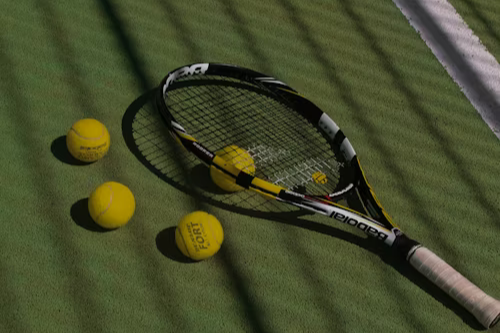
How to Choose a Tennis Racket for Beginners: A Simple Guide to Finding the Right Balance of Comfort, Power, and Control
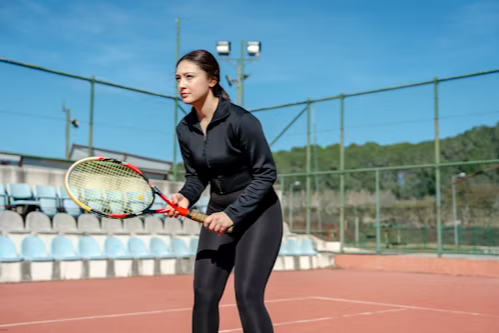
Choosing your first tennis racket is a bit like choosing your first travel companion. You don’t really know what you need yet, only that you’re about to begin something new—something that might frustrate you, surprise you, and slowly become part of your routine. I remember standing in front of a wall full of rackets for the first time, completely overwhelmed. They all looked similar at a glance, but the price tags varied wildly, and every label seemed to promise “power,” “control,” or “spin.” None of that meant much to me back then.
If you’re just starting out, you’re probably in a similar place. You might be asking yourself: Does the racket really matter? Can’t I just pick the cheapest one and start hitting balls?
The honest answer is yes—you can. But choosing the right racket from the beginning can make your learning experience smoother, more enjoyable, and far less frustrating. It won’t magically make you a great player overnight, but it will help you build confidence and avoid unnecessary struggles.
Let’s walk through this together, not as a technical checklist, but as a story of what actually matters when you’re holding that racket for the first time.
1. The First Feeling: Comfort Over Everything
When I first picked up a tennis racket, I didn’t know what “grip size” or “balance point” meant. All I knew was how it felt in my hand. That feeling, as simple as it sounds, is where you should begin.
A beginner’s biggest mistake is focusing too much on specs and not enough on comfort. If the racket feels awkward or too heavy, you’ll notice it immediately when you swing. Your shots will feel forced, and your arm will get tired quickly.
Instead, hold the racket naturally, like you’re about to shake someone’s hand. Does it feel secure? Does your hand wrap around it comfortably without squeezing too tight?
If it feels right, that’s already a good sign.
2. Weight: Lighter Doesn’t Mean Worse
At first, I assumed heavier rackets were better—more “professional,” more powerful. But after trying a few swings, I quickly realized how wrong I was.
For beginners, lighter rackets are usually the best choice. They are easier to swing, easier to control, and much more forgiving when your technique isn’t perfect (which, let’s be honest, it won’t be at the beginning).
A lightweight racket helps you:
- React faster
- Reduce arm fatigue
- Avoid injuries like tennis elbow
You don’t need something ultra-light to the point it feels like plastic, but aim for a manageable weight—something that doesn’t strain your wrist after a few swings.
Think of it this way: you’re learning how to move, not how to lift.
3. Head Size: Bigger Is Your Friend
This is one of the most important factors for beginners, even though it doesn’t get talked about enough in casual conversations.
The “head size” of a racket refers to the area of the string bed. A larger head size gives you a bigger “sweet spot”—the area where the ball feels clean and controlled when you hit it.
When you’re just starting, you’re not going to hit the center of the strings every time. In fact, you’ll miss it quite often. And that’s okay.
A larger head size helps compensate for that.
It gives you:
- More forgiveness on off-center hits
- More power with less effort
- A smoother learning curve
If you’re choosing between a smaller, “pro-style” racket and a larger beginner-friendly one, go with the larger head. You can always switch later as your skills improve.
4. Grip Size: Small Detail, Big Difference
I didn’t pay attention to grip size at first—and I regretted it after a few sessions. My hand would slip slightly during swings, and I had to grip tighter to compensate, which made my arm tense.
Grip size might seem like a minor detail, but it can affect your control and comfort more than you expect.
A grip that’s too small:
- Makes you squeeze harder
- Increases the risk of injury
A grip that’s too large:
- Reduces flexibility in your wrist
- Makes it harder to adjust your shots
A simple way to check: when you hold the racket, there should be a small gap (about the width of a finger) between your fingertips and the base of your palm.
If you’re unsure, it’s generally safer to go slightly smaller—you can always add an overgrip to adjust.
5. Balance: The Hidden Factor
This is something I didn’t even know existed until much later: racket balance.
Some rackets are “head-heavy,” meaning more weight is distributed toward the top. Others are “head-light,” with more weight near the handle.
For beginners, a slightly head-heavy racket can be helpful because it adds extra power to your shots without requiring perfect technique.
It’s like having a little boost built into your swing.
However, if it feels too heavy at the top, it might slow you down. So again, it comes back to feel. Swing it a few times. Imagine hitting a ball. Does it feel natural?
If yes, you’re on the right track.
6. Strings: Don’t Overthink It (Yet)
When I first heard people talking about string tension and types, I felt completely lost. Polyester, multifilament, natural gut—it sounded like a science experiment.
Here’s the truth: as a beginner, you don’t need to worry too much about strings.
Most rackets come pre-strung, and that’s perfectly fine to start with. Focus on learning how to hit the ball consistently before diving into string customization.
If anything, just make sure:
- The strings are not too tight (you want a bit of power)
- The racket feels comfortable when hitting
You can always explore this later as your game develops.
7. Price: Expensive Doesn’t Mean Better (For You)
This is where many beginners get stuck. It’s tempting to think that a more expensive racket will make you play better.
I thought the same.
But high-end rackets are often designed for advanced players who already have strong technique. They offer more control—but less forgiveness.
As a beginner, what you need is the opposite:
- More forgiveness
- Easier power
- Comfort
A mid-range racket is usually the best choice. It gives you quality without overwhelming you with features you don’t yet need.
You’re not buying your forever racket—you’re buying your first step.
8. Brand: Familiar Names vs. Right Fit
You’ll see popular brands everywhere—Wilson, Babolat, Head, Yonex. It’s easy to assume one is better than the others.
But the truth is, most major brands offer excellent beginner options.
Instead of asking, “Which brand is best?” ask:
- Which racket feels best in my hand?
- Which one makes me want to play more?
Because in the beginning, motivation matters more than brand loyalty.
9. Testing: If You Can, Try Before You Buy
One of the best decisions I made was borrowing a friend’s racket before buying my own. It wasn’t perfect, but it taught me what I liked and didn’t like.
If you have the chance:
- Try different rackets at a store
- Borrow from friends
- Rent one at a tennis court
Even a few swings can tell you a lot.
Sometimes, the “right” racket isn’t the one with the best specs—it’s the one that makes you feel confident when you step onto the court.
10. The Emotional Side of Choosing Your First Racket
This might sound strange, but your first racket is more than just equipment.
It’s the thing you’ll carry onto the court when you’re nervous, excited, or unsure of yourself. It’s there when you miss easy shots and when you finally hit that one clean forehand that makes you smile.
I still remember mine—not because it was perfect, but because it was mine. It represented the moment I decided to start.
So when you choose your racket, don’t just think about specs. Think about how it makes you feel.
Does it make you want to play?
That matters more than anything.
Final Thoughts
If you take nothing else from this, remember this simple idea: as a beginner, your goal is not perfection—it’s progress.
Choose a racket that:
- Feels comfortable
- Is easy to swing
- Gives you confidence
Avoid overcomplicating the process. You don’t need the most advanced technology or the most expensive model. You just need something that helps you enjoy the game enough to keep going.
Because in the end, tennis isn’t about the racket.
It’s about the quiet moments between hits, the sound of the ball meeting the strings, and the small improvements that slowly build into something meaningful.
And every journey—no matter how long it lasts—starts with that first swing.
Related Post
Why Your Racket Feels Heavy: My Personal Journey of Fatigue, Overthinking, and Rediscovering My Natural Rhythm
Why Your Racket Feels Heavy — And What It Taught Me About More Than Just [...]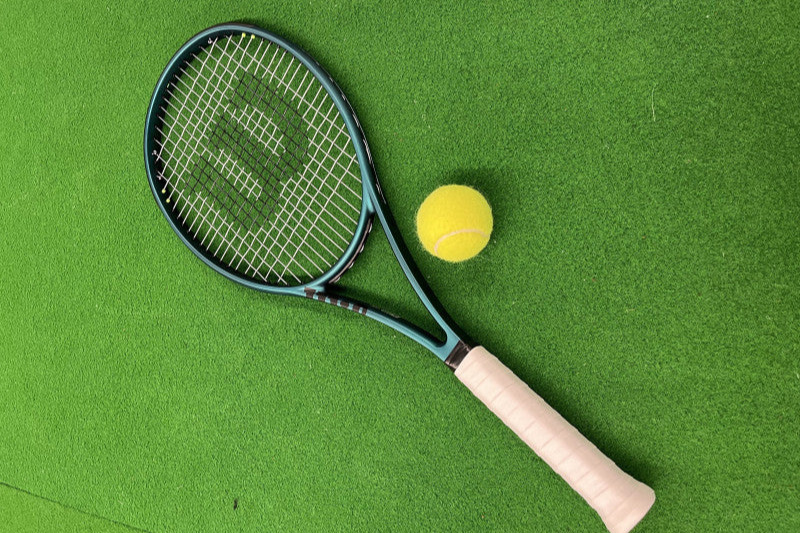
Wilson Blade 98 Review (2026 Guide – Control, Feel & Precision)
Last updated: March 2026 | Tested on court The first time I picked up the [...]