Best Pickleball Paddles for Control: My Personal Journey from Power-Driven Mistakes to Precision and Consistency
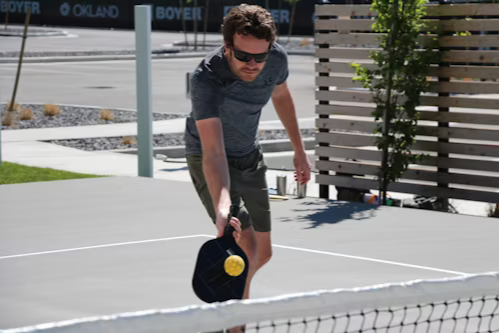
When I first picked up a pickleball paddle, I didn’t think much about “control.” Like most beginners, I was focused on simply getting the ball over the net. Power felt exciting. Smashing the ball hard made me feel like I was improving quickly. But it didn’t take long before I realized something important—power without control is just noise.
I remember one particular game that changed everything for me. I was playing against an older player, someone who didn’t look particularly athletic or aggressive. Yet, point after point, he placed the ball exactly where I didn’t want it. Soft dinks that barely cleared the net. Precise shots that hugged the sidelines. I hit harder, but he played smarter. And I lost—badly.
That was the day I started paying attention to control. And more importantly, to the paddle I was using.
Why Control Matters More Than You Think
Control in pickleball isn’t just about being “accurate.” It’s about confidence. It’s about knowing that when you aim for a spot, your paddle will respond exactly how you expect it to.
When you have a control-focused paddle, a few things begin to change:
- Your dinks become softer and more precise
- Your third-shot drops land more consistently in the kitchen
- Your volleys feel stable instead of unpredictable
- You stop overhitting out of fear
Control gives you patience. And patience, in pickleball, wins games.
What Makes a Paddle Good for Control?
Before diving into specific paddles, it helps to understand what actually creates that “controlled” feel.
From my experience (and many trial-and-error purchases), these are the key factors:
1. Core Thickness
Thicker cores—usually around 16mm—tend to absorb more impact. This reduces the “pop” and gives you a softer feel. That softness is what allows you to guide the ball instead of launching it.
The first time I switched from a thinner paddle to a thicker one, it felt strange. Almost muted. But within a few games, I realized I was making fewer mistakes.
2. Surface Material
Paddles made with graphite or carbon fiber faces tend to offer better control compared to fiberglass. Fiberglass is more reactive and powerful, while carbon fiber feels more stable and predictable.
If you like shaping shots and adding spin, carbon fiber is often the way to go.
3. Weight Balance
Heavier paddles can provide stability, but they can also reduce finesse. Lighter paddles offer quicker reactions but sometimes lack consistency.
The sweet spot for control usually sits in the midweight range—around 7.8 to 8.3 ounces. That balance gives you both stability and maneuverability.
4. Grip Comfort
This might sound minor, but it isn’t. If your grip doesn’t feel right, your control suffers immediately. A comfortable grip allows subtle adjustments, especially during delicate shots near the net.
My Favorite Pickleball Paddles for Control
Over time, I’ve tested quite a few paddles. Some impressed me immediately, while others grew on me slowly. Here are the ones that truly stood out for control.
1. Selkirk Vanguard Control Series
The first time I used a Selkirk Vanguard paddle, I noticed how forgiving it felt. Even when I didn’t hit the ball perfectly, it still went where I intended.
This paddle has a thicker core and a carbon fiber face, which makes it incredibly stable. It doesn’t generate overwhelming power, but that’s exactly the point.
What I love most is how it performs in the soft game. Dinks feel natural. Drops feel effortless. It almost feels like the paddle is helping you slow the game down.
If you’re transitioning from beginner to intermediate, this paddle can teach you how to play with intention.
2. JOOLA Ben Johns Hyperion CFS 16
This paddle is often talked about, and for good reason. It’s designed with control in mind, but it doesn’t completely sacrifice power.
When I first tried it, I noticed how consistent my shots became. The spin potential is excellent, which adds another layer of control. You’re not just placing the ball—you’re shaping it.
It does take a bit of adjustment, especially if you’re used to lighter paddles. But once you settle in, it feels incredibly reliable.
I remember playing a long rally with this paddle, exchanging soft shots at the net. Every touch felt deliberate. That’s when I realized how much control influences your confidence.
3. Engage Pursuit MX 6.0
This one surprised me. At first glance, it doesn’t look drastically different from other paddles. But the feel is unique.
The Engage Pursuit MX 6.0 has a slightly firmer response, but it still offers excellent control. It’s the kind of paddle that rewards clean technique.
If your fundamentals are solid, this paddle will amplify your precision. If not, it might expose your mistakes—but that’s not necessarily a bad thing.
Using this paddle helped me refine my touch. It forced me to slow down and focus on placement rather than power.
4. CRBN-1 16mm Paddle
Minimalist in design, but incredibly effective.
The CRBN-1 is one of those paddles that doesn’t try to impress you with flash. Instead, it quietly delivers consistency. The carbon fiber face gives it a crisp yet controlled feel.
I found it particularly useful during defensive play. Blocking fast shots became easier because the paddle absorbed just enough energy.
It’s also great for players who like a straightforward, no-nonsense paddle. No gimmicks—just performance.
5. Paddletek Tempest Wave Pro
This paddle has been around for a while, and there’s a reason it’s still popular.
The Tempest Wave Pro is known for its control and touch. It has a slightly softer feel compared to some newer paddles, which makes it very forgiving.
I often recommend this paddle to players who are still developing their soft game. It gives you room to learn without punishing every mistake.
One of my favorite moments with this paddle was during a casual match with friends. Instead of trying to win points quickly, I focused on extending rallies. And surprisingly, that’s when I started winning more.
Choosing the Right Paddle for You
Here’s the truth—there’s no single “best” paddle for everyone.
What works for me might not work for you. And that’s okay.
When choosing a control paddle, think about your playing style:
- Do you prefer long rallies or quick points?
- Are you comfortable at the net, or do you stay back?
- Do you rely on spin, or do you play more straightforward shots?
If possible, try different paddles before committing. Borrow from friends, test demo programs, or visit local courts where players are willing to share.
I’ve learned more from trying paddles than from reading specs.
How a Control Paddle Changed My Game
Switching to a control-focused paddle didn’t just improve my accuracy—it changed how I approached the game.
I became more patient.
I started thinking a few shots ahead.
I stopped trying to win every point with one swing.
Instead of forcing the game, I began to guide it.
There’s something satisfying about setting up a point slowly, moving your opponent around, and then finishing with a simple, well-placed shot. It feels intentional. Almost like telling a story through each rally.
And that’s what pickleball started to feel like for me—a conversation rather than a battle.
Final Thoughts
If you’re struggling with consistency, it might not just be your technique. Your paddle could be playing a bigger role than you realize.
A control paddle won’t magically fix everything, but it will give you the tools to improve. It will slow the game down just enough for you to think, adjust, and grow.
And maybe, like me, you’ll have that one game—the one where you realize that control isn’t just a skill. It’s a mindset.
So next time you step onto the court, pay attention to how your paddle feels. Notice how the ball responds. Experiment. Adjust.
Because sometimes, the biggest improvement doesn’t come from hitting harder.
It comes from learning to touch the ball just right.
Related Post
How to Get the Best Deal on Rackets: My Personal Journey of Finding the Perfect Balance Between Price, Quality, and Smart Choices
How to Get the Best Deal on Rackets(A personal journey into finding value, quality, and [...]
Top-Rated Racket Stores in the USA (2026 Guide – Best Places to Buy Rackets)
Last updated: March 2026 | Verified stores & real experiences When I first started playing [...]