Onix Z5 Paddle Review: A Complete Guide to Control, Comfort, and Consistency for Players Looking to Improve Their Pickleball Game with Confidence
When I first picked up the Onix Z5 paddle, I wasn’t expecting much beyond what people usually say about it: “great for beginners,” “solid control,” “forgiving feel.” You hear those phrases so often in the pickleball world that they almost lose meaning. But sometimes, a paddle becomes popular for a reason that only makes sense once you’ve spent real time with it—on the court, under pressure, when your hands are sweating and your opponent is aiming right at your weaknesses.
This is not just a technical review. It’s more of a story—my experience with the Onix Z5, how it felt from the first hit to the moment I realized what it could (and couldn’t) do for my game.
First Impressions: Simple, But Intentional
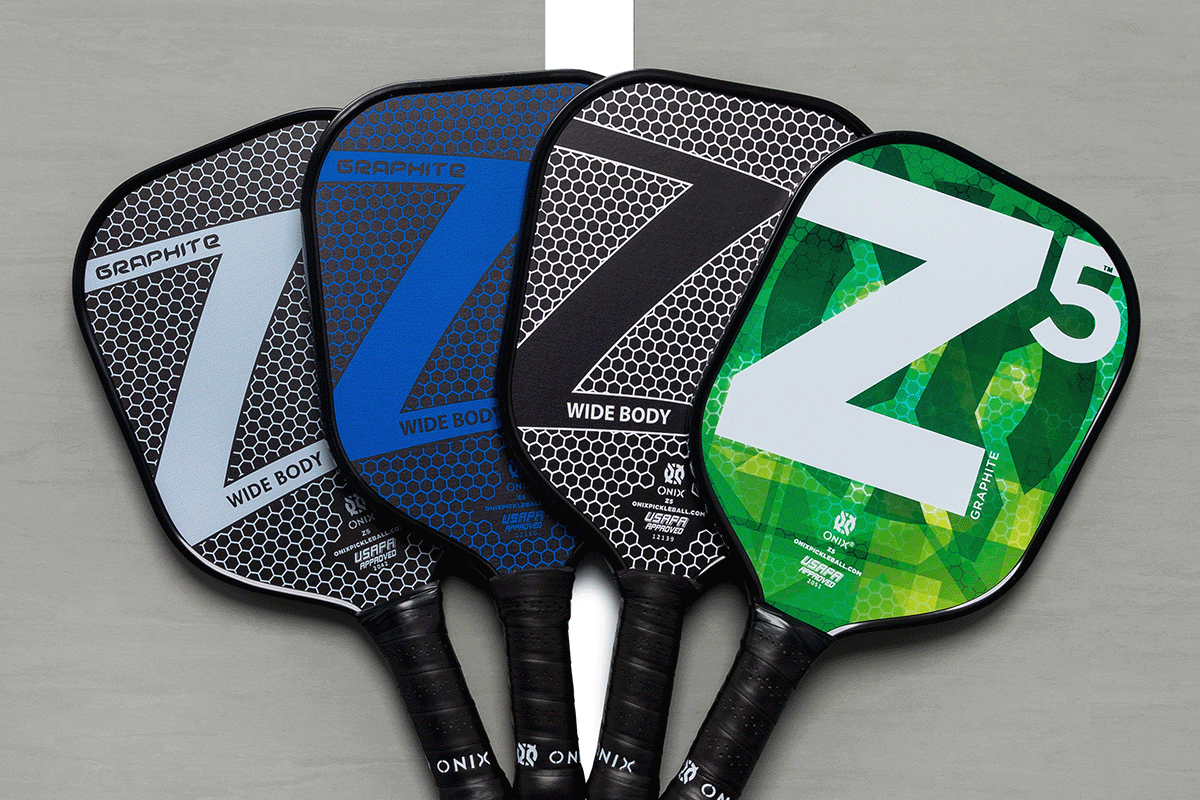
The first thing that struck me about the Onix Z5 was how uncomplicated it looked. No flashy graphics screaming for attention, no over-engineered design elements trying to impress. Just a clean, wide-body paddle with a fiberglass face and a nomex honeycomb core.
At first, I almost underestimated it.
It didn’t feel like a “premium” paddle in the sense of modern carbon fiber builds that dominate today’s market. But once I held it properly and took a few shadow swings, something clicked. The paddle felt balanced and familiar, like it wasn’t trying to fight me or force me into a specific playing style.
And that’s where the Z5 starts to shine—it meets you where you are.
The First Game: Adjusting to the Feel
My first game with the Onix Z5 was… awkward.
Not because the paddle was bad, but because it was different from what I was used to. I had been playing with a more power-oriented paddle, one that gave me easy put-away shots but punished me when my timing was off.
The Z5, on the other hand, demanded something else: touch.
The fiberglass face gives it a slightly softer feel compared to harder carbon surfaces, but the nomex core adds a crisp “pop” that you notice right away. The combination is interesting—it’s not overly soft, but it’s not harsh either.
During the first few rallies, I hit a couple of balls long. Then a few into the net. It felt like the paddle was telling me, “Slow down. Think about what you’re doing.”
And once I did, everything started to change.
Control: Where the Z5 Earns Its Reputation
If there’s one word that defines the Onix Z5, it’s control.
After a few games, I began to appreciate how predictable the paddle felt. When I aimed a shot cross-court, it went there. When I softened my grip for a dink, the ball stayed low. There were fewer surprises—and in pickleball, that’s a huge advantage.
The wide-body shape also plays a big role here. The sweet spot is generous, especially for players who don’t always hit the exact center of the paddle. Off-center hits don’t feel punishing, and the ball still travels with decent accuracy.
For beginners and intermediate players, this is incredibly helpful. It builds confidence. It allows you to focus on strategy instead of constantly worrying about mishits.
I remember one rally in particular. Long, patient, filled with soft dinks and careful placement. Normally, I would have rushed to end the point. But with the Z5, I found myself enjoying the rhythm, trusting the paddle to keep the ball where I wanted it.
Eventually, my opponent popped one up, and I finished the point with a simple volley.
Nothing flashy. Just controlled.
Power: Not Its Strongest Suit, But Not Weak Either
Let’s be honest—the Onix Z5 is not a power paddle.
If you’re looking for explosive drives that blow past your opponent, this isn’t the paddle that will do the work for you. You’ll need to generate your own pace through proper technique and timing.
That said, the Z5 isn’t powerless.
The nomex core provides a certain crispness and responsiveness that helps when you need to speed things up. On overheads and put-aways, the paddle can deliver enough punch to finish points—just not in an effortless, “cheat code” kind of way.
And maybe that’s a good thing.
Because instead of relying on raw power, you start to develop better habits. You place your shots more carefully. You construct points instead of rushing them.
In a way, the Z5 teaches you to play smarter.
Spin: Adequate, But Not Game-Changing
Spin is one area where the Onix Z5 feels a bit limited compared to newer paddles.
The fiberglass face can generate spin, especially if you have good technique, but it doesn’t have that grippy, textured feel that modern carbon fiber paddles offer. You can hit topspin drives and slice returns, but you’ll have to work a bit harder for them.
I noticed this most during serves.
With my usual paddle, I could rely on spin to create awkward bounces. With the Z5, my serves felt more straightforward—less deceptive, more about placement than trickiness.
At first, I saw this as a drawback.
But over time, I started to see it differently.
It forced me to focus on consistency. On depth. On positioning my opponent instead of trying to out-spin them.
Again, the paddle wasn’t just a tool—it was shaping how I played.
Comfort and Feel: A Paddle You Can Trust
One thing I didn’t expect was how comfortable the Onix Z5 would feel during extended play.
The handle has a classic, slightly cushioned grip that fits naturally in the hand. It doesn’t feel overly bulky or too thin—it just works. Even after multiple games, I didn’t feel the kind of fatigue that sometimes comes with stiffer paddles.
The sound is also worth mentioning.
There’s a distinct “pop” when the ball makes contact—a sound that’s both satisfying and informative. You can tell when you’ve hit a clean shot versus a slightly off-center one.
That feedback matters more than you might think.
It helps you adjust. It helps you learn. It builds that connection between your intention and the outcome.
Who Is the Onix Z5 Really For?
This is the question that kept coming back to me as I spent more time with the paddle.
At first glance, it’s easy to label the Z5 as a “beginner paddle.” And yes, it’s excellent for beginners. The large sweet spot, forgiving nature, and control-oriented design make it one of the easiest paddles to pick up and play with.
But I don’t think that label tells the full story.
The Z5 is also for:
- Intermediate players who want to refine their control and consistency
- Doubles players who rely on dinking and placement rather than power
- Anyone who values reliability over flashiness
Even some advanced players keep a Z5 in their bag—not as their main paddle, but as a reminder of fundamentals.
Because sometimes, going back to basics is exactly what you need.
The Limitations: Where It Falls Short
No paddle is perfect, and the Onix Z5 is no exception.
As I played more competitive matches, its limitations became clearer.
- Lack of advanced spin technology compared to newer paddles
- Less power for aggressive baseline players
- Older design that doesn’t incorporate the latest materials
If you’re an advanced player looking for cutting-edge performance, the Z5 might feel a bit… dated.
But that doesn’t mean it’s obsolete.
It just means it serves a different purpose.
A Moment That Changed My Perspective
There was one game that really defined my experience with the Onix Z5.
I was playing against a stronger opponent—someone who relied on speed, spin, and aggressive shots. Normally, I would have tried to match that intensity, often leading to mistakes.
But with the Z5 in my hand, I played differently.
I slowed the game down.
I focused on placement, on keeping the ball low, on making my opponent hit one extra shot. The paddle gave me the confidence to do that—to trust that the ball would go where I intended.
And something unexpected happened.
I started winning points.
Not because I overpowered my opponent, but because I outplayed them.
That’s when I understood what the Onix Z5 is really about.
Final Thoughts: More Than Just a Paddle
The Onix Z5 isn’t the newest paddle. It’s not the most powerful. It’s not packed with cutting-edge technology.
But it has something that many modern paddles lack:
Honesty.
It doesn’t mask your mistakes, but it doesn’t punish you harshly either. It gives back exactly what you put into it. If your technique is solid, it rewards you. If not, it gently pushes you to improve.
And maybe that’s why it has stood the test of time.
In a sport that’s constantly evolving, where new gear is released every year promising better performance, the Z5 remains… steady. Reliable. Familiar.
It’s the kind of paddle that grows with you.
So if you’re asking whether the Onix Z5 is worth it, the answer depends on what you’re looking for.
If you want something flashy, powerful, and packed with modern features, you might want to look elsewhere.
But if you want a paddle that teaches you the game, supports your development, and reminds you why you started playing in the first place…
The Onix Z5 might be exactly what you need.
Related Post
Seasonal Deals on Rackets (2026 Guide – Best Times to Buy & Save)
Last updated: March 2026 | Best seasonal sales & buying tips I still remember the [...]
Best Rackets for Fast Swings (2026 Guide – Tested & Reviewed)
Last updated: March 2026 | Updated with latest racket testing They say speed in tennis [...]